Search

Bits and Bytes

Thoughts on digital, running rambles and photos

Tag

twitter

PR is changing, ads using bone conduction, social coppers and this week’s bits and bytes

Sainsbury’s favourite tweets: This month’s instalment sees Tweets from the Tu relaunch, the start of the Summer Series and our tasty new pet food (so our furry friends tell us). Check out our favourite Tweets from June 2013.

Why the world of PR is changing: If you have the time, I urge you to read the transcript of former head of comms for Tony Blair @campbellclaret‘s speech at the Centre for Corporate Public Affairs Annual Oration on 27 June in Melbourne. It’s a few pages long, rambles at times, but if Alastair Campbell talks about why the world of PR is changing, it’s a good idea to listen. I won’t summarise the whole thing, but here are some thoughts that stuck with me:

  • Public affairs now covers any interaction between any two people or organisations
  • The product, large or small, is what will decide the strength or weakness of the PR
  • In a world of more choice and more information, people are getting better at knowing reality from spin
  • Too many decision makers define their reality according to that day’s media. It is almost always a mistake (that one is Campbell quoting President Clinton)
  • So good public affairs is not about spin; it is about strategy, and reputation
  • It is amazing what you can survive if you stay true to your own values and you stay strategic
  • So whether you call it PR, marketing, comms, public affairs, or a mix of it all, what I think matters is strategic advice and reputation support

Journalism is now something you do: A wonderful piece by @MatthewI about why it is more difficult than ever to decide who qualifies as a journalist, how it makes for a confusing media landscape and why that is a good thing.

Close to the bone: I found this first one in a list titled ‘10 new reasons to hate advertising‘. Unsuspecting train passengers – resting their heads against the window – suddenly hear an ad for Sky Go in their head. A little device sends vibrations through the glass and these are picked up and interpreted by the brain as sound. It’s called ‘bone conduction’ and it’s actually being used by Sky on trains in Germany to promote their service.

It also means we’re now no longer safe from advertising when we’ve got our eyes closed, dozing on public transport. It’s also why the this video was the only thing on the list of 10 new reasons to hate advertising – it’s terryfing enough to make up for nine other advertising sins (HT @usvsth3m).

Build it and they won’t come: But not all advertising is evil. In fact, there’s a strong argument that without it, even the best products (Rdio) don’t stand a chance against mediocre products (Spotify) because they still believe in that old adage: build it and they’ll come. That might (have) worked for Facebook and Instagram, but it shouldn’t be the rule. A lovely post from @AndrewDumont about how the core team for any product should be made up of a developer, designer and marketer (HT @jcolman).

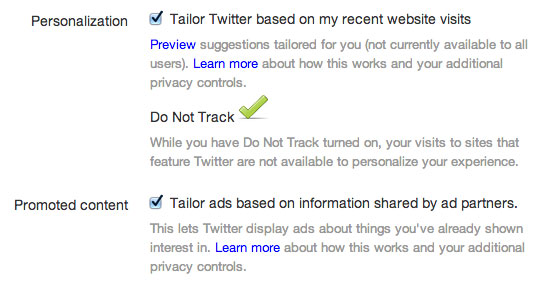
Websites you visit will influence the Twitter ads you see: Over in the US, Twitter is experimenting with new ways of allowing advertisers to tailor ads for its users, depending on what they get up to when they’re browsing other websites.

Good for advertisers (they have more of a chance to reach the right people with the right message at the right time), but possibly intrusive for users. Mind you, is it not better to get ads that are relevant to your interests? Also, as much as I love Twitter, would I pay for it? Still, Kudos to the Twitter folks who in their announcement post also clearly note that as they support ‘do not track’, you can opt out quite simply from your account settings screen.
Source: Twitter

Note: as this is currently being tested in the US, the personalisation line reads “The feature to tailor Twitter based on your recent website visits is not available to you.”

Credit where credit’s due: A great example of how to win at social media this week from @Tescomobile (I know, those guys).

With their 140-character response to a derogatory Tweet about their service, the Tesco social team not only defused this troll, they received a bunch of kudos (10k+ retweets) and did it by matching perfectly their social tone of voice to that of their above the line campaign, thereby underlying their customer service credentials. Hats off chaps.

Social coppers: Not only have they got better weather and mid-afternoon naps are more or less obligatory, the Police in Spain really do get the benefits of embracing social. Officers in Granada have the force Twitter handle sewn into their uniforms and it’s also on their police cars. Why is this good@HelReynolds believes it demonstrates openness, legitimises social and it’s plain old common sense.

As the BBC has also noted, so-called ‘Tweet raids’ (where the official police account in Spain @Policia calls for witnesses and information on crimes) have proven to be very successful in bringing criminals to justice and have led to the arrest of 300 individuals in Spain last year.

For a British approach to social media policing, make sure to check out the wonderful @SolihullPolice and their best efforts.

Tech Nation: Turns out that according to the Newsworks/Kantar media’s Tech Nation quiz I am a ‘social addict’, one of the five personality types derived from answering 10 or so quick questions about what kind of devices you own and your attitudes to certain tech-related situations. The depressingly accurate definition is below and supposedly significant of the ‘lifestyle-choices’ I’ve made (HT @MindyB_).

Screen Shot 2013-07-05 at 08.29.42

Newsworks/Kantar have put together this simple tool to promote their research into the tech habits and landscape in the UK. They found that the UK spends more than £50 billion a year on technology products. Unsurprisingly then, £1.5 billion was spent on tech advertising in 2012, up from £1.4 billion in 2011.

Videos of the week: The eMart flying store (or how a Korean convenience store chain promotes home delivery to their tech-happy, mobile-savvy and time-poor customers)

Rory McIlroy competes against an extremely sassy version of HAL (or a Golf Laboratory Computer Controlled Hitting Machine)

And Geico tell us why camels are so happy on a Wednesday

And finally: The Samsung Apex (definitely NSFW, HT @ghensel and @TheOnion).

Planning for real-time, EE’s 4G tractor, political lunches and this week’s bits and bytes

Real-time marketing: Good news for marketing bods the world over. According to Twitter’s head of agency sales @daranasr: “When people talk about planning for the moment and real-time marketing they get really scared that they have to be tweeting every second of every day, but there are things you can plan months in advance based on what you are doing.

Source: Adage

So, you plan for moments where the attention of a large part of the country is focused on one event. You come up with different scenarios. You assemble a team of creatives, copywriters, PRs. Most importantly, you get someone with the authority to give the green light on whatever reactive idea your team comes up with. How else are you going to capitalise on that one moment with a genius bit of content before your competitors do?

Fair enough. But I think this quest to create that perfect piece of viral content is a bit like playing the lottery. You’re likely to play your whole life and never get lucky.

Meanwhile, thousands of opportunities go missing because we’re so focused on getting that one big hit. I think the focus should be on individual people, interactions and everyday conversations that are taking place all the time. Listen to what people are saying to and about you, delight them with genuine messages of support: give them a retweet, comment on their blog, pin their Instagram image or like their Facebook post. Show them you’re listening and reward them for the time (and money!) they’ve spent on you. It takes a second to interact, but for anyone who’s ever been tweeted by a celeb account will know what an exciting feeling it is.

Social Wimbledon: Nadal out in the first, Federer out before a Grand Slam quarterfinal for the first time in a decade, Sharapova dispatched by the 131 seed. Twitter is already in overdrive with more tweets during the Nadal/Darcis match (7,000 tweets per min) than during last year’s final. There’s also a great little social insights page on the Social Wimbledon page, providing visitors with some interesting insight into what people are talking about.

Also, I love that they’re tapping into the great British culture and Wimbledon tradition of queuing by actively promoting the #TheQueue hashtag. After all, isn’t it always more fun to share the pain of waiting with randoms on Twitter?

Oh, and while we’re on Wimbledon: Here are some photos of players in action where their tennis racket has been replaced with something else entirely (possibly NSFW).

Political lunch: George Osborne’s Tweeted a photo of himself this week showing him chowing down on a posh Byron burger. He was predictably mocked for devouring his £7 burger whilst preparing a budget speech. The Daily Mail has a blow-by-blow account of proceedings, here’s the gist of this excellent exchange that followed.

Eric Pickles decided he’d join in the fun and posted a photo in an identical pose – deciding to swap out the offensively expensive burger for a more healthy salad.

Again, Twitter wasn’t pleased and people were soon posting photoshopped photos of Pickles eating everything from a bucket of KFC to a stuffed pig’s head – the latter coming from Jeremy Vine, ensuring that this went far and wide.

For now though, it looks like Osbourne has had the last laugh:

4G tractor: A great stunt from mobile phone operator EE who have equipped an eco-friendly tractor with 4G technology to create a WiFi hotspot for those attending Glastonbury. Slight catch: you have to be within 10 metres of the danged thing.

Source: EE

Photography meets Google Glass: What happens when photojournalist @koci takes Google Glass to the streets? You get possibly the first real reason why wearing these things and looking like a complete tool might actually be worth it. Street photography. Check out Koci_Glass on Instagram for what you can do with the 5mp camera and what I assume is a healthy dose of photo editing on Google+ and Diptic (HT @frischkopp).

“First day on the streets with Google Glass. #throughglass blown away by the sharpness and clarity for only 5MP. The lens is a little to wide for my street style, but I understand why it’s so wide. Not a single person noticed, that I could tell, that’s probably because we don’t look each other in the eyes normally. More to come.”

Vine vs. Instagram video: according to Vine vs Instagram, Vine is ever so slightly ahead of Instagram video (HT @Adverplanner). Read more about how Vine and Instagram users have very different missons and cultures and why it’s all about #TeamVine in the Atlantic.

Twitter are also actively promoting clever Vine’s from advertising agencies – something that I am sure will lead to agencies producing better Vines. The ‘how to’ clips from Lowe’s are particularly brilliant (HT @tonyw).

Video of the week: Did he know or was he really caught by surprise? Whichever way you look at it, Gus Poyet’s live sacking during half-time of the Uruguay vs. Tahiti match in the Confed Cup is brilliant TV. Me? I think he knew. The interview is just too good, he comes across perfectly as the victim and has clearly received some excellent media training. Also, 15 minutes before Gus supposedly found out on air, his son Diego tweeted that there wouldn’t be any more trips to the Amex (Brighton’s stadium). That tweet has since been deleted by @diegopoyet7, further fueling my suspicions.

And finally: People running for trains in slow motion.

Video on Instagram, hazy marketing, masterful UGC from REI and this week’s bits and bytes

Video on Instagram: Speculation about Instagram launching their own short form video service to counter Twitter’s Vine finally came true this week. You can now photograph and film your latte using Instagram.

(I swear I wrote that before I watched the video – WHERE SOMEBODY VIDEO INSTAGRAMS THEIR LATTE!)

Anyway, the differences between Instagram video and Vine:

  • you can take up to 15 seconds of video (rather than only 7 seconds on Vine)
  • the filters that made Instagram so popular are also available to videos shot with Instagram
  • when you post a video, you can select a particular still from your clip as the hero image

Vine responded by posting some videos of their own, featuring sneak peaks of new features for  revamped video stream categories and draft Vines (yes please!) – at least, that is what Techcrunch believes they are.

Hazy marketing: Remember when real-time marketing went mainstream? You know, when Oreo tweeted about being able to dunk an Oreo cookie in the dark after the lights went out at the Superbowl? And everybody loved it and wrote blog posts about how brilliant it was and how since then anybody working in comms has thought about how they can get their own Oreo moment?

Well, even the masters at Oreo don’t always get it right. You may have seen coverage on the BBC yesterday about the haze in Singapore from the forest fires in Indonesia (much like the ones 16 years ago when I was still in high school in Singapore – only much, much worse). The marketing bods decided that this message to their Singaporean fans would be a good idea.

Source: Oreo

Now, I can’t see the response to the image (the post is only visible to people in Singapore), but personally, I think this is in bad taste and I wouldn’t be surprised if the locals don’t see the funny side.

Bizarrely Adidas posted a similar effort to their Facebook page: offering 152 free gym passes on a day when the Pollutant Standards Index hit 152 at lunchtime.

Source: Adidas

Now, anything between 100-200 is considered to be unhealthy, so encouraging people to head out in that environment isn’t such a smart thing. In fact, on June 20, the PSI peaked at 371, a level of pollution deemed to be hazardous – but they are still posting similar content (although they’re no longer so keen on matching free gym passes to the PSI levels).

Am I getting too paranoid?

High street food chat: Research from Visceral Business and Synthesio found that 10 UK high street brands account for 96% of all social media food conversations. Those brands: Burger King, KFC, Starbucks, Pizza Hut, McDonalds, Subway, Greggs, Nando’s, Ben & Jerry’s and Dominos (HT @DigitalBlonde).

REI Member Stories: Recreational Equipment Inc (REI) make outdoor gear and clothing. Their clientele ranges from skiers, ridiculously inspiring iron-women (like @celia_cole), climbers, trekkers… you get the idea. A great post on PSAMA goes into detail about how REI works closely with their customers to create some stunning user generated content to market their products in intensely engaging clips (HT @jcolman).

Key advice from @Kelly_Ann_Walsh, Digital Equipment Program Manager for REI: “Don’t try to create a new behaviour. Try instead to integrate what your community is already doing.” And some key questions for any company interested in using UGC in their marketing:

  • What is your community doing and how can you leverage it to provide value to your audience?
  • What are your objectives for engagement?
  • How can you leverage current behaviour to create a community or connection?
  • How can you drive continued engagement?
  • Do you have the resources to moderate the content and scale?
  • What are the legal considerations?

Digital publishing ≠ paper publishing: “As we adapt to a world of connected devices, the way we think about our content publishing process and workflow must adapt too.” An excellent piece by @karenmcgrane in the Harvard Business Review.

Good news: “The noun and verb tweet (in the social-networking sense) has just been added to the OED. This breaks at least one OED rule, namely that a new word needs to be current for ten years before consideration for inclusion. But it seems to be catching on.

Would you hire these people? A post entitled ‘The Crazy, Creative Staff Photographs Of Ad Agencies’ and I really couldn’t say it any better. Some of these really are very whacky (HT @tomparker81).

Videos of the week: This Russian commercial for Tampax takes an unexpected turn (HT @KristianWard29)

Russell Brand makes a mokery of MSNBC’s Morning Joe (not too hard, but still, pretty good television)

And finally: Textatrosphe

80 social media rules, Google+ is The Matrix and this week’s bits and bytes

@SainsburysPR’s favourite tweets: As ever, at the end of the month at @SainsburysPR, we look back at our favourite Tweets of the month. May was yet another fun month, with a range of Tweets from fashionable ways to wear Sainsbury’s carrier bags, the Sainsbury’s Summer Series to Tweets about products our customers love.

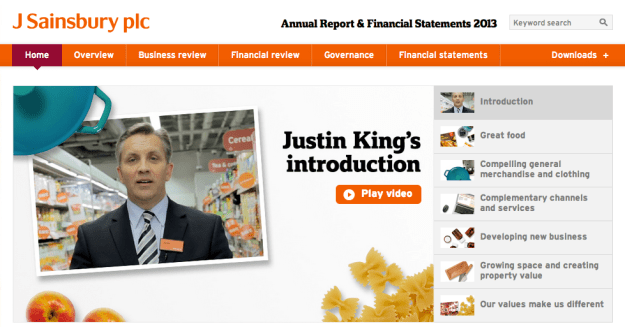
Animated business review: Sainsbury’s published its Annual Report this week and to tell the story of how we performed over the last financial year, we created five quirky stop-frame-animated clips of our five areas of focus and why we believe our values make us different.

Screen Shot 2013-06-06 at 22.01.49
Source: Sainsbury’s Annual Report 2013

3 Must read posts this week:

  1. Adobe’s head of social media and general good guy @jeremywaite pulled together a rather brilliant list of 80 social media rules. The kind that you can happily print, frame and hang on your wall and follow.
  2. The Guardian’s tech editor @charlesarthur believes that we’ve all been looking at Google+ the wrong way: It’s not a social network like Facebook. Yes, you can follow friends and people and add them to circles and message them and post stuff and comment on things. He reckons that Google is more interested in all the other things you’re doing when you’re logged in to Google, Gmail, Youtube and Google Maps. Because that’s when you’re feeding Google information about your needs, likes and interests and wherabouts as well as movements. In turn, Google learns what you want and delivers that reality to you.
    Arthur compares Google+ to the computer construct of The Matrix films, where humans are kept in suspended animation, plugged into a dream world as their bodies’ BTU power the machines that have taken over the world (man, I love that film).
    Next time you’re searching for something, or looking on a map, or searching on YouTube, you’ll see what Google has decided are the “most relevant” results (and of course the “most relevant” adverts). If you frequent climate change denial sites, a search on “climate change” will turn those up ahead of the sites run by rational scientists. Whatever your leaning, politically, sexually, philosophically, if you let Google+ see it then that will be fed back to you. It’s the classic “filter bubble”.
  3. Rory Sutherland writes in Wired about four psychological theories as to why Amazon enjoys unrivalled success – and his argument for how we go about saving marketing.

Social media assistant: Gary Vaynerchuk, prolific über-blogger and boss of VaynerMedia, has hired someone to shadow him and produce content for dissemination across his social media properties. A full-time social media shadow. The idea is that while Gary is speaking at conferences, discussing social media in meetings or just chatting with people over lunch, there will always be someone to record and publish his thoughts.

My first reaction: “That’s bonkers”. Surely it can’t just be about the amount of content? But then, this:

Vaynerchuk’s broad-based social media push goes back to his belief that “it’s not good enough to just produce long-form content; you have to put out micro-content to drive awareness to it.” He’ll be creating “content native to the platform where the audience is,” which means that he [as captured by his assistant] might take a concept and write a blog post about it for his WordPress site, film a video, create an animated gif for Tumblr, post a quote on Instagram – or all of the above.

I think the point is that you or your organisation has to embed social media infrastructure, processes and training into the way you do business. Only then will your people  be able to produce content that speaks to your customer, tells the corporate story and helps achieve your business goals. For Gary that means socialising his every utterance, for others that could be as basic as making sure that more people at your company are savvy enough to understand what kind of message would play well in the outside world, how to capture it and how to get it out.

Vine now on Android: How else to announce that Twitter’s six second video sharing app Vine is now available for Android phones than through a Vine? The Android version has everything that the 13 million iPhone users already know, as well as a unique to Android function: zoom.

Visualising Tweets: Nifty work from the guys at Twitter who’ve plotted some incredibly accurate maps using nothing but the geographic information from geotagged Tweets. Unsurprisingly, major cities appear as bright spots of heavy Twitter activity, with major roads and even ferry traffic routes clearly visible when you zoom in.

Source: Twitter Office on Flickr

Videos of the week: Last week we had Hahn sort out the problem of spilled beers, this week it’s Burger King at the forefront of fast-food R&D with their Hands Free Whopper technology.

How much is a can of Pepsi? One Facebook Like.

A marvellous new campaign from the community run mobile network Giff Gaff: Don’t be scared.

And finally: Actors laughing between takes.

BVB’s PR masterclass mobbed by Puma, Guardian Coffee and this week’s bits and bytes

BerryLove: Judging by the weather today and last weekend, it looks like Summer might actually be happening after all. The @SainsburysPR team (thank you to @MindyB_ for the art direction!) decided to post our first Vine to celebrate the arrival of British strawberries into our stores. Wooo!

Sing when you’re winning: Dortmund and Bayern played out the first ever Germanic Champions League final last weekend and even though Dortmund lost the game, they clearly won the PR battle. Their Deckchair Tour of London in a big, bright yellow bus was particularly brilliant, placing the chair in strategic locations around the capital (including, of course, the obligatory beach towel).

Source: Borussia Dortmund

Before the game, The Guardian published their excellent interview with Dortmund’s coach, Jürgen Klopp. Even after Bayern were crowned champions of Europe, the indomitable spirit of Klopp shone through in his press conference and the way he summed up the game.

But then came Dortmund’s kit sponsors Puma with probably the world’s worst flash mob: Defeated by the Lederhosen-clad Teutons of Bavaria and on their way back to Germany, the Dortmund squad were greeted at Stansted Airport by a troupe of Puma clad street-stylers (is that what they’re called?), beat-boxing and break-dancing to an audience of utterly nonplussed BVB players.

Again. This was a good 12 hours after the final whistle. So I have to assume that the marketing bods at Puma knew their team had come out second best but decided to go ahead regardless. I suppose the performers had been paid and everything was ready to go. After all, it can’t be that easy to get permission to do this kind of thing at an Airport.

Unsurprisingly, the video bombed and was shared for all the wrong reasons.

But it gets better.

Two days later and in response to some rather colourful language and malicious glee on Twitter, Puma decided to put out this promoted tweet (fair play to them for engaging with the conversation and not just hiding away):

The Tweet takes you through to a poll on their Facebook page where Puma acknowledge that the best time for a celebratory flashmob is when you have something to celebrate. I suspect they deserve some brownie points for apologising – kind of – but I cannot understand why they went ahead with the flashmob in the first place.

Just to finish off on the Champions League final, here are some facts on the match from Twitter: 4.8 million Tweets with Robben the most mentioned player.

The long tail of the press release: Research from PR Newswire shows that the average life span of a press release is about four months. While findings like this from a company that distributes and hosts press releases should be taken with a pinch of salt, it does also show that good stories and releases will be found by interested readers and remain relevant long after they’ve been published (HT @CorpCommsMag).

#GuardianCoffee: Following in the footsteps of TAZNRC daily and the Winnipeg Free Press News Cafe, The Guardian launched their own coffee shop this week. No, really. Aptly named #GuardianCoffee, the café popped up in Shoreditch’s Boxpark and is meant to provide journalists a place to work. The reception’s been mixed: GQ thought it more suited to “those more interested in Instagramming their latte art rather than enjoying a conversation”, while Vice felt “the vibe was sterile and deathly”. The best summary of events though goes to Us vs Th3m (HT @stangreenan).

Still, it’s got nothing on the Czechs and their Newsroom Cafés where local newspapers are produced jointly by editorial staff and guests of the café.

Tumblr launches ads: Yahoo didn’t waste any time in getting ads onto Tumblr, rolling out sponsored posts to their entire platform (they’d already been live for about a year on Tumblr’s mobile app). Somewhat predictably, the reception has been negative with some users quick to post ways to remove the ads from their pages.

Updates to both Twitter and Facebook: Twitter updated its mobile app, refreshing the tweet composer screen, making it easier to tweet images. The new layout also makes it easier to see which account your tweeting from (useful for those people who don’t want to mix their work and private Twitter accounts).

Facebook meanwhile took a leaf out of the Twitter playbook (read: flat out copied) and launched verified pages. They’ve not even bothered to come up with their own symbol – they’ve just gone and used Twitter’s blue tick.

What’s in a ringtone? A good one for the next time you’re down the pub with your friends. Did you know that the sound that Facebook makes when you receive a video call is made up of the notes F, A, C and E (HT @stangreenan)?

Google MotoX: Google have announced plans to build a smartphone that will predict what you’re going to do before you do it. Gyroscopes and other sensors will continuously track the whereabouts and movements of the phone so it will know if you’re walking around your neighbourhood and pulling it out of your trouser pocket or if you sitting in the back of a cab on your way to the airport. Expect to be out of battery by the time you get to work (HT @TreebD).

Videos of the week: A brilliant stunt from Samsung in Zurich to promote the new Galaxy S4 and its ‘smart pause’ function.

You and nine of your mates happen to be in flat, open area and have a hankering for some 5-a-side footie action? Nike’s ‘Mi Pista’ app/campaign has got you covered (HT @stangreenan).

Aussie brewer Hahn is working to put an end to all those beer spillages on dance floors around the world.

And finally: Beardvertising. Yes. This is real.

Print your own food, Yahumblr, Sharenting and this week’s bits and bytes

Print your own food: A chap called Anjan Contractor received a $125,000, 6-month NASA grant to build a prototype 3D printer that prints food. Meant for space travel, you don’t have to be a Star Trek fan to understand that it could also be used to provide food in the future when the population is higher and presumably natural food sources become scarce (HT @stangreenan and @a_little_wine).

Rather than pots, fresh ingredients, and a stove – the 3D printer creates food from basic powdered ingredients loaded in cartridges. Even better, because these cartridges contain simply the building blocks of various different kinds of food and have a massively increased shelf-life compared to fresh food, the amount of food waste would be greatly reduced.

It gets better. What’s the first dish Contractor is looking to print?

Pizza.

Source: Quartz

Yahumblr: Yahoo bought Tumblr this week for $1.1bn. Yahoo’s CEO Marissa Mayer set up her own Tumblr to announce the news – how else, but with an animated gif, the currency of the blogging platform (although, the Keep Calm meme? That’s sooo 2011). From the opening lines of her post, she is keen on making hard core Tumblrs know that Yahoo “promise not to screw it up.”

But why purchase a collection of blogs made up of cat images, animated gifs, porn (seriously, 1 in every 6 pages is NSFW) and sites dedicated to ‘Fuck yeah…’? They’re after a younger demographic and they’re hoping to sell access to it. Mayer did emphasise on an investor call that Yahoo would let Tumblr be Tumblr – but it’ll be interesting to see how Yahoo reconciles Tumblr’s naughty bits with the family friendly environment Yahoo has built up. The Harvard Business Review believes that it can work, but only if Yahoo listens closely to the Tumblr community.

Source: Marissa Mayr

Twitter security: Twitter has finally rolled out two-factor security. You link your Twitter account with your mobile phone and set it up so that you’re sent a verification message to your phone that you have to then input together with your password when you log in. That way you need the account password and your phone to log in – making it more difficult for accounts to get hacked.

The problem is that for corporate accounts that are managed by more than one person, this system won’t work because an account can only be linked to one phone number. Hopefully then, Twitter will add support for the Google Authenticator app.

Xbox One: Want to know what you’ll be getting your kids/yourself for Christmas this year? Microsoft’s new gaming console, the Xbox One.

Free McDonald’s for kidnap hero: A great bit of opportunistic PR from McDonald’s, which has decided to give the man who famously put down his Big Mac to help rescue three women held captive for years in a Cleveland house free McD’s for a year (HT @tomparker81).

A few hazelnuts short of a full spread: Imagine you’re the brand manager for Nutella. Over years, you’ve nurtured a relationship with a 40,000 strong fan community on Facebook. Every year, the page admin runs a Nutella appreciation day. A day where people share their Nutella inspired recipes and other odes to the Greatest Chocolate Spread The World Has Ever Seen (well, after Saino’s popping candy chocolate spread of course).

Happy days.

Then, unbeknownst to you, your legal department issues a cease and desist order to shut down the Nutella fan page. Obviously the fans went apoplectic, but through quick work, Nutella quickly reversed their position, wiping the chocolate from their face.

Sharenting: My social streams are full of people posting photos of their offspring. From the first ultrasound, to live tweeting the birth, Instagrammed photos of all early-life stages to jumpy six second home-video-vines of first steps and/or utterances. It bores the crap out of me. At least there’s ‘Unbaby Me‘, a handy browser extension that removes photos of babies in your Facebook and Twitter feeds and replaces them with whatever you’d rather see. I’ve gone for Imgur’s most viral RSS feed.

The Guardian looks at the pros (really?!) and cons of sharenting – the growing trend of young parents documenting their offspring’s development through social media.

Source: STFU, Parents

20 social insights: A thought provoking deck by @paulbromford about the top 20 things he learnt about social media last year. I LOVED slide #12: “Wifi is like electricity – people need it to do their jobs properly“. Then there’s #10: Trust. And #7: Relationships. Check it out for yourself – and do make sure you also visit Paul’s blog to see his notes on each slide (HT @AllThingsIC).

Tech and food: Two things I love and am ridiculously fortunate to combine in my job at Saino’s. So I was intrigued by a post from @nealunger about how similar tech and food blogging is. After all, both audiences form part of my target audience every day. Neal writes:

Both fields depend on producing large amounts of content for an obsessive and mostly financially comfortable user base. There’s a reason for the glut of well-funded tech and food web sites these days; a shitload of people read them, and advertisers want to reach that audience. To put it bluntly—tech and food publications both reach monomaniacs with money to throw around.

Tweet your afterlife away: According to the Beeb, Saudi Arabia’s religious police are employing an interesting (futile?) tactic to stop its population from using increasingly popular social media platforms to voice their political and religious views. They’re warning that anyone doing so “has lost this world and his afterlife“. They’ve obviously not heard of the Arab spring…

Social teens: Research from Pew Research Centre about teens, social media and privacy has found that teenage social media users aren’t too concerned about business or advertisers accessing their data. Do also have a look at some of the focus group quotes, as they provide an interesting snapshot of just how savvy teens are when using social media and how different platforms are used for different purposes.

Insight: Excellent advice from XKCD on adopting every new tech

Source: XKCD

Grid: Excel is a really useful program for calculations, recurring formulas and financial information. We also use it for many other purposes like content plans, weekly reports and contact lists. I’d argue that most of the things we use Excel are better done in other ways, yet it remains the go-to platform for organising information. Not much longer I hope, as this video for a new collaborative planning tool called Grid shows.

Video of the week: Clever stuff from – again! – McDonald’s with their Chalkboard versions of their menus. Such a simple idea to bring that down-to-earth, homemade and wholesome feel to a global brand.

And finally: Cat beards and of course, double cat beard.

Dorky Google Glass, Hyperlapse videos and this week’s bits and bytes

Twitter news: Much has been written about Twitter’s link to and role in breaking news, so it shouldn’t come as a surprise that it is looking to hire a Head of News and Journalism to shape and drive the next growth phase of Twitter’s partnership with the news industry.

Fergie retires: The news that Fergie had finally hung up his hairdryer on Wednesday was announced via Twitter.

The story received the breaking news treatment from the media, trended worldwide in a matter of minutes and was mentioned in over 6 million Tweets in 24 hours. Some brands were quick to jump on the back of the news with the cheeky chaps at Paddy Power with easily the best effort.

Source: The Mirror

Equally Brilliant was Nando’s “Fergie Time” tribute – opening all their restaurants in Manchester five minutes late (HT @stangreenan).

Wikipedia traffic predicts share price: A spike in traffic to a company’s Wikipedia traffic might be a sign that their share price is about to go off a cliff. That’s according to a study published in Scientific Reports, which looked at Wikipedia page view data from the last 5 years and compared it to shifts in share prices on the Dow.

Cause and effect: A couple of weeks ago at Twitter4Brands, Twitter told the assembled social media bods in the Tate Tanks that a 30% increase in positive Tweets is four times more effective in driving sales than a 30% increase in existing above-the-line advertising. No surprise that Twitter is looking to tout its various wares to digital marketers, but @wittlake points out there isn’t any proof for that statement. In a wonderfully argued post, Eric points out that it should read:  A significant improvement in the quality of your product improves word of mouth and increases sales.

Is Google Glass just too dorky? Google Glass prototypes are being reviewed by influential tech bloggers and they are going slightly mental. Now, don’t get me wrong, I love me some new gadgets. Sure, I want to try Glass and yes, wearable computing is (probably) the way forward. And yes, these are the first mass produced prototypes, a first of its kind product. But what many of these reviews seem to miss is that the wearer looks like a complete and utter knob and unless Google (or some other company) figures out how to reduce the levels of knobness, I’m not sure this will take off outside the realm of the dorks. Or, as the guys at SNL see it:

Then again, as White Men Wearing Google Glass points out, if Google Glass didn’t exist, all these Silicon Valley guys would be having affairs or buying unsuitable motorbikes.

Hyperlapse videos: An amazing bit of programming, combining the imagery from Google Maps with and easy way to map out directions from A to B delivers some very amazing hyperlapse footage. Here’s one I made of Tower Bridge. That’s just using the web app, check out what you can do with a lot more time and programming know how or read more about how it works on the Teehan+Lax Labs site.

The maker movement: Nope, not some sort of religious thing – best to imagine this as the combination of DIY, engineering and tech. It’s not really new, ‘hacking’ things to make them do something that wasn’t their original purpose has been around for as long as human imagination. But as with many other things, digitisation, open source, t’Interwebs and most recently 3D printing has accelerated and increased what is possible. Staples is the first company that is selling 3D printers for $1,300 allowing you to design anything from cup holders, action figures to music records. Check out the video that is embedded for how chilled that small girl is drawing on the iPad, creating her own toy!

Digital influence = real life perks: American Airlines has launched an offer for their digitally savvy (self-involved?) passengers to score free access to their Admirals Club lounge – all they need is a Klout score of 55 or higher. An interesting move that will get people talking about upgrades – enticing others to also connect their social media accounts to Klout. Now, whether Klout is actually an accurate represtation of online influence? Doubtful…

Twitter life lesson: Dick Costolo, co-founder of Twitter, delivered the commencement address at Michigan University, his alma mater. An inspiring talk calling for students to focus on something they love and to not always worry about their next line but instead, to live in the moment. Good old ‘merican cheese, but enjoyable nonetheless.

The Youtube Map: A nifty mash-up of Youtube viewing, sharing stats, geographic and demographic stats gives you the Youtube Trends Map. No surprise that the ‘Dead Giveaway Guy’ is the most popular clip right now.

Videos of the week: Diet coke installs the world’s slimmest vending machine ‘Slender Vender’

While 7Up counters with the ‘Melting Machine’ – the world’s coolest vending machine

Clever use of of lenticular printing by Grey for an outdoor campaign for the ANAR Foundation in Spain

We’ve seen Hyundai’s botched attempt at promoting a car’s eco features. Volkswagen has come up with a different angle to promote their auto stop/start feature. Not sure it’s the best way to sell it though…

And finally: those movie snippets in The Simpsons with McBain? When put together, they make a complete (short) film!

GoPro understands social rewards, POTUS rocks and this week’s bits and bytes

Sainsbury’s: Remember when you could slap Jamie Oliver via Youtube? Well, we’ve come up with our own version of that interactive Youtube clip to accompany our Kitchen Heroes campaign. Check it out to see what you can do with a carton of by Sainsbury’s chopped tomatoes (needs some work in the juggling department though…).

Also, make sure you watch the über-tasty food pornography that is the new by Sainsbury’s ads. Probably the greatest sausage sandwich you’ll ever see.

And yup, another month has passed which makes it time for a look back at our favourite tweets from April. Highlights were the new Gok for Tu collection, the Cake and Bake Show and of course the news that Sainsbury’s is sponsoring the British Athletics Summer Series.

Twitter safety: After high profile Twitter accounts from news organisations were compromised – most recently that of AP which caused a dip in the DOW – Twitter has sent a memo directly to the newsdesks with some tips on how to keep their accounts safe. Key points to remember are to use secure passwords and change them regularly, keep your email secure and keep an eye out for suspicious activity from any apps you may have authorised to have access to your account.

So far, so sensible. But then they go on to say that you should designate one computer to use for Twitter exclusively. So no email or browsing the Web. Bizarre. Here’s hoping this is all just a temporary stop gap before Twitter rolls out two-factor-authentication.

Reward & inspire: A customer that has bought your product and created something beautiful will most likely be a fan of your product. Should they chose to share this beautiful thing they’ve created, all you need to do is share that with your community. Your customer’s creation will serve to inspire other people to do the same or inspire their own ideas.

Much like Lego, the people at GoPro are brilliant at using the things their customers create and share them through their own social media channels. GoPro sells tiny HD cameras that can be mounted on pretty much anything, from tripods/helmets/skis/skateboards, to guitars, dogs and mouthpieces. The videos that they chose to share are some of the most incredible, inspiring, awesome clips you’ll see on the web. Sure, it helps if these videos feature a host of beautiful (often scantily clad) people doing awesome things, gratuitous use of slow motion and time-lapse photography as well as a pounding electro soundtrack, but you get what I mean.

Case in point – a video of a dude solving a Rubik cube. Not interested? How about if it’s three cubes at the same time. Still nothing? OK then. How about a video of a dude solving three Rubik cubes simultaneously WHILE JUGGLING THEM (are you listening @AlexCole71?). Thought so.

Facebook fatigue: There has been much talk about Facebook fatigue and the latest numbers from SocialBakers don’t show any turnaround in fortunes for the big blue social network, especially not in developed markets such as Europe, the US and Australia. In the last six months, Facebook has lost nearly 9m monthly visitors in the US and 2m in the UK. Why is this? The Guardian asked readers why: it’s superficial, boring, gimmicky and there’s too much fighting. An interesting point from a reader: It’s no longer a place where you can keep up with what’s going on with your friends and family – it’s a place where business can farm your information from.

Facebook’s demise seems somewhat exaggerated though. Its first quarter figures show that monthly and daily active users are up to 751 million and 665 million respectively. Even though net income was less than what analysts expected, mobile revenues is what seems to have saved Zuck for now: they’ve doubled this in six months. Still, as Nikhil Kumar notes in his excellent analysis for the Evening Standard notes, there is room for caution.

SMS is dead? Well, perhaps not dead, but definitely green around gills. Turns out that in 2012, more people sent messages using chat apps such as BBM, What’s App, Skype, iMessage than using good old fashioned SMS. A study by Informa found that almost 19 billion instant messages were sent using chat apps in 2012, compared to 17.6 billion SMS texts. All of that of course means a massive whole in revenues for mobile phone carriers. Suppose we can all expect data tariffs to become more expensive!

POTUS standup: President Obama spoke at the annual White House Correspondents’ Dinner this week. Not only was he funnier than Conan (not hard), his 20 minute routine just shows how charming the man really is and how important it is to count Steven Spielberg as one of your friends. For fans of the US version of House of Cards, please make sure you check out Kevin Spacey and a host of democrats and republicans come together for an excellent “Prom of the Nerds” spoof.

Still on POTUS – the White House this week joined Tumblr and in its first post, outlined exactly what people can expect from the blog with a nifty, hand-drawn pie chart. The administration will tumble quotes from Potus, videos, behind the scenes stuff and updates from Vpotus and Flotus. So far, so good. A sign that Obama’s social media bods are very much plugged into to the Internet Zetigeist comes in the form of a stand on how to pronounce the word “gif”. Rather than go with the soft G as in ‘gist’ (which, mind you, is the way that the inventors of the gif format intended it to be pronounced), the president has decided to go with the hard G as in gift. Let the battle of the geeks begin.

Source: White House

No. 10 Twitter first: Not wanting to be left out, Downing Street plans to use Twitter to give preferred journalists a heads up on announcements before they are made in parliament. I have a feeling we’ll be getting many more The Thick Of It moments as a result.

Can you tell a story in 6 words? Hemingway allegedly penned: For sale. Baby shoes. Never worn. But what about a story in 6 seconds of stop/start footage via Twitter’s Vine? Here are the award winning 6 second vines from the Tribeca film festival.

Anticipatory computing: Imagine you’re talking to a friend about planning your weekend, talking about potential restaurants, destinations and activities. You’re using an iPad app called MindMeld that listens to what the two of you have to say, conducts Internet searches on some of the keywords you use, and displays them in real time. As someone who has been in a long distance relationship and dependent on technology like Skype and FaceTime, I cannot imagine anything worse. But make up your own mind with this video

Videos of the week: every day, more photos are taken with the iPhone than any other camera – a fact that Apple have gone and used as the idea for their new ad (and going by Flickr data, it’s actually true!).

Apple fan boys (why hello there!) and Samsung owners fight all the time on who has made the better tech choice. Have a look at this for a clever bit of advertising.

Budweiser’s ‘Buddy Cups‘ makes toasting friends instant friends on Facebook.

Ecotricity comes up with an excellent clip to promote alternative power sources.

And finally: Ed Balls breaks the Internet.

Breaking news vs social media, sexy data and this week’s bits and bytes

Traditional vs. social news: There’s been a lot of discussion about how traditional media and new media failed in their coverage of the Boston Marathon bombing. I agree to a degree. CNN – and other news organisations – had a shocker and spent hours spinning a story about the bombers being identified before their identities were released by the authorities – a point that Jon Stewart (who isn’t the biggest fan of the network anyway) proceeded to make fun of on ‘The Daily Show’.

There’s also been much talk about how social media – mainly Twitter and, of all sites, Reddit – got the news wrong, as if they have some sort of obligation to get it right. That’s like accusing the patrons of your local pub of reporting the story in an inaccurate way. Social media, much like banter down the pub, isn’t subject to journalistic principles. It is bizarre to me that at times such as this people point the finger at social media and blame it for purposefully spreading misinformation. As much as technology like Twitter helps breaking news, facts, rumours and misinformation spread like wildfire, it isn’t the cause of that misinformation. The power to spread misinformation – or topple governments like during the Arab Spring – is with people, not technology.

Twitter doubles account security: While we’re on the topic of misinformation spreading on social media, this week saw yet another high profile Twitter account getting hacked. The Associated Press appeared to tweet that explosions had hit the White House and President Barack Obama had been injured. The account was immediately suspended and the tweets removed, but not before the Dow dropped about 200 points. No wonder then, that people are relieved that Twitter is finally ready to roll out two-factor authentication, a second layer of security that requires a code to either be sent to an authorised mobile device or generated via some sort of app or key-fob.

Crisis management: An interesting take on crisis management – as seen from the perspective of @jameslyne, one of the top IT security bods at Sophos. Great to see that after IT colleagues, the next team he has on the list is PR.

Interactive infographics: The aptly named ThingLink allows you to post images with extra layers of information in them such as videos and links to other supporting stories to Facebook, Twitter and many other platforms (except for WordPress it seems… grrr). Youtube videos and audio clips play in the image, text links provide a short preview and open in a new window – making for a decent user experience (at least on a desktop!). Doctors Without Borders have tried the new technology to provide an interactive guide on how they respond to crisis around the world; Cnet use it to provide a review of the new Galaxy S4; and you can check out many more ways brands and people are using ThingLink on their site. So what? you cry? Well, ThinkLink generates ‘more than five times as much engagement’ on Twitter (HT @BrionyIvy).

Data porn: Wolfram Alpha’s Facebook plugin has been live for a while and this week, the computational search engine published a fascinating dissection of Facebook data. The data provides insight into how Facebook users’ circle of friends change over time (especially in age), how their interests change as they grow older, and when their relationship status shifts from single to in a relationship to engaged to married. Now, before you go off and say, pffff, that’s just Facebook. Nobody tells the truth on Facebook – Wolfram concludes that (at least for the US) the data corresponds closely to official census data.

Source: Wolfram Alpha

Environmentally friendly suicide: “Right. Guys. We’ve got this new car. 100% water emissions. Environmentally friendly. How do we get that message across in our next ad?” Here’s how Hyundai answered this challenge (I tried to embed the video, but copies are being taken down like crazy by Hyundai). The mind boggles. Twitter wasn’t impressed. Holly Brockwell, who publishes the Copybot blog, posted a withering response to the ad, talking about how her father had committed suicide as depicted by the ad. It was quickly pulled from Hyundai’s Youtube channel but of course by then, many copies had already been made and the news spread (HT @a_little_wine).

Before you die, make sure you sort your direct debit: Your father in law passes away and you receive a bill from your cable provider telling you that as the direct debit didn’t go through – after all, the payer was deceased – you’re faced with a late payment fee of £10. What do you do? Post it to Facebook and watch it be shared over 90,000 times! All ends well though, Virgin Media apologised, the late payment charge was removed and the customer wrote a poem to celebrate (HT @KristianWard29).

Feed the troll until it bursts: The general consensus on social is to not feed the trolls. They’re bored, looking for a fight, to get a rise out of you, to see if they can get you to breaking point. Well, whoever manages the @Cineworld Twitter feed is the exception that proves the rule. Seriously, worth reading the entire exchange – if you have a bit of spare time! @Lakey from econsultancy takes a closer look at the exchange and why not more companies handle customers this way.

Location based recommendation: Foursquare continues its shift from check-in to a search an discovery space. Turns out that over 50 million people have visited its homepage in the last two months.

Videos of the week: the dancing babies are back

New LG screens are just too darned realistic

And some buttery goodness from Lurpak.

And finally: After Bayern and Dortmund demolished their hapless opposition in the Champions League semifinals, Paddy Power posted this wonderful photo to their Facebook page. And yes. That is The Hoff.

Create a free website or blog at WordPress.com.

Up ↑