Search

Bits and Bytes

Thoughts on digital, running rambles and photos

Category

Bits and bytes

Blogger relations, changes at Twitter and Facebook and this week’s bits and bytes

Tasty blogger relations: At Sainsbury’s, we cultivate a tasty relationship with around 100 food bloggers. Our delicious community is full of food obsessed people who love nothing more than rising to culinary challenges ranging from creating something with our by Sainsbury’s ready rolled puff pastry or sharing their kitchen hero recipes with us.

More often than not, @a_little_wine and I will sit there going through coverage alerts and fight the urge to lick our screens, so scrumptious are the creations from the community.

We refer to them as our food blogger community – but you could also refer to them as brand advocates. Which is why I thought this post about the power of brand ambassadors was a great summary of what these kinds of communities can do for a brand: generate trust, credibility, engagement and impressions – and I’d add a fifth to the mix and that would be high quality content. We regularly share creations from the community with our Twitter followers to inspire them to try a new product or recipe they might otherwise not have come across.

#TwitterIPO: Twitter’s share price went from the initial public offering price of $26 to $45 within minutes after shares were finally made available on the New York Stock Exchange. That means the company went from being worth $18bn to a wee bit over $30bn. CNBC reckons it’s worth exploring Twitter’s business model and prospects and whether “a community of ephemeral messaging” can morph into a serious, profitable venture.

Storify + Twitter: My favourite development of the week (besides Arsenal beating both Liverpool and Dortmund) comes from Storify. The go-to-tool when it comes to curating the web in just a few clicks has just made it easier to then share your digital collages with your followers by allowing a sort of slide show to embedded into Twitter. Extremely nifty and an excellent way to take advantage of Twitter embeds as it effectively allows you to go waaaaay over the 140 character limit in one tweet.

Who better to demonstrate than President Obama himself.

Is Facebook’s walled garden coming down? Facebook and Twitter are coming ever closer in functionality, freely copying features from each other. Facebook adopted Twitter’s hashtags, Twitter adopted Facebook’s way of displaying links. Twitter copied the share button with its retweet button. Twitter also copied the idea of the favourite button from Facebook’s like button. Twitter even copied the idea of an IPO. Sheesh.

The one big remaining difference between the two networks though is that they are at different ends of the public vs private scale: On Facebook users tend to share a lot of personal information with a smaller group of friends, while on Twitter users share very little personal information with pretty much anyone.

That big difference might be changing with Facebook’s announcement this week that it is removing an old setting called “Who can look up your Timeline by name.” This will mean that anyone will be able to look up your Facebook profile using your name and see what they already have permission to see. Facebook explicitly states that “removing this setting doesn’t change who can see your photos, status updates or other things you’ve shared.”

I do hope they keep that point of difference alive – I know I will be keeping my eye on Facebook’s privacy settings quite closely when this feature rolls out soon. Inside Facebook has a 5 step guide to protect your Facebook privacy (for what its worth).

The thumbs up gets the axe: Say goodbye to the Facebook thumbs up – the iconic symbol for digital approval is getting the chop, in favour of a more corporate and cold Facebook F. The change will happen over the next few weeks, according to the Facebook developer blog.

Source: Facebook

Books still relevant to youth shock: In my final year of high school, I received a pager for Christmas. I was well chuffed. No my friends could call my pager and I would see the number and I could call them back. We developed codes. 999 meant call me back immediately. 143 meant I love you. Yes, we spelt out boobs. It was the first portable digital screen in my live and it was awesome.

Fast forward to today and 17% of children in the US under the age 8 use a mobile device at least once a day. This stat comes from a recent Common Sense media study. If anything, I’m surprised (and relieved?) it isn’t higher and that books still play such a big part.

Hang on, I’ll get you some ice for that burn: Pepsi celebrated Halloween last week with some creative depicting a can of Pepsi dressed up as a can of Coke. The line reads: “We wish you a scary Halloween”.

In response, Coke quite brilliantly used exactly the same image, but changed the tagline to “Everyone wants to be a hero”.

Ouch.

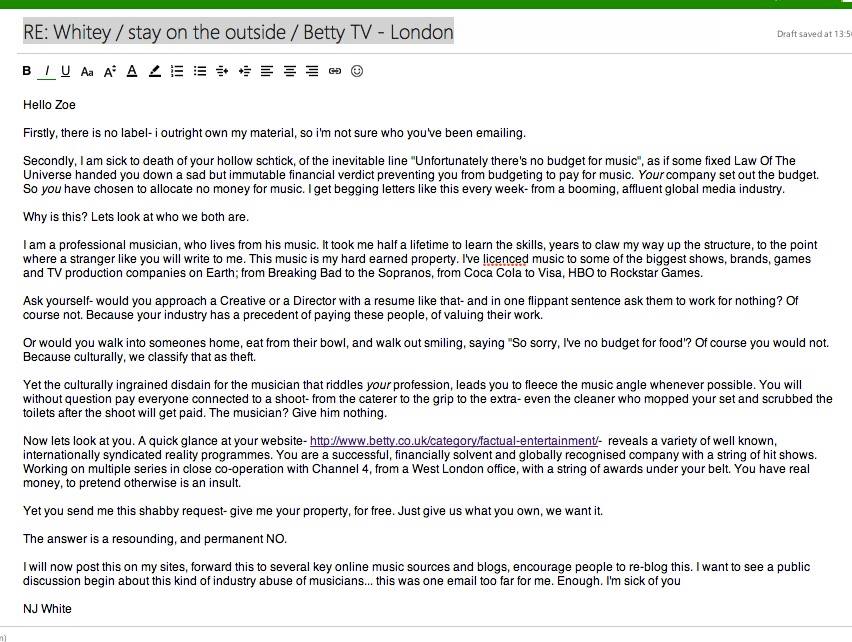
While we’re on burns: Betty Productions ask musician Whitey if they can use his music in a new TV show for free as there is ‘no budget for music’. He, um, declines (HT @tomparker81).
Video of the week: Meet the Footbonaut, a 360-degree-ball machine that fires footballs at players from all angles, requiring them to control and dispatch the balls into the appropriate square. Cutting edge technology currently in use at Borussia Dortmund – but still not as good as having an on-fire Aaron Ramsey in your team.

And finally: Hats off to @TescoMobile for the masterclass in Twitter sass (it’s OK. They only made it into Buzzfeed. We made it onto Time Magazine, thanks to @tomparker81).

Teens on social, the myth of the digital native, how we shop and this week’s bits and bytes

Facebook had a mixed week: While it beat analysts expectations by reporting $2 billion in revenue, the news that led coverage was the fact that young teens are using the site less. The following slide from The Huffington Post makes for worrying reading for Facebook. The amount of teens rating the social network as important has dropped from 42% to 23% – but not to worry too much: Instagram is up from 12% to 23%. Also, it’d really be interesting to know what that ‘Other’ category is made up of.

Mind you – if the Giraffe profile pic game is so popular on Facebook that it merits an article in the Telegraph, I’m not surprised teens aren’t too impressed anymore (HT @a_little_wine).

I jest – but while Instagram is growing in importance for teens, it still isn’t as important as Facebook. Perhaps then, there are different forces at play here?

Generation Analog and the Myth of the Digital Native: An fascinating article on Mobile Youth takes an ethnographic look at human interaction, arguing that an online interaction will never be able to pass on as much unspoken or unwritten information as a face-to-face interaction.

“Offline is the moment of truth. When it comes to the jugular issues of trust and emotion, you can’t cheat the offline world.”

The piece goes on to talk about how our mobiles are the perfect link between our online and offline lives – perhaps an explanation of why platforms such as Instagram, Vine or Snapseed are growing in importance. They provide a quick, simple and always on method of capturing our experiences with friends.

“Mobile phones are a proxy, a surrogate for our times; mobile phones are the tools that can help maintain but not improve our social networks. What youth really want from technology is emotion and connectivity to support the offline world.”

Or, to put that differently:

“Take offline out of the equation and all that online stuff becomes meaningless.”

A top read that I do encourage you to spend some time on!

What’s Google+ up to then? Well, according to this recent blog post it looks like they’re no longer going after the social networking market. Instead, the play seems to be one of media management and enhancement with some nifty new image editing tools.

They’ve integrated the excellent Snapseed mobile platform, which in turn has just added an excellent HDR photo filter that will bring much more depth to your shots and the ‘Auto Awesome’ features look like they will allow you to pull of very impressive photo manipulations in just a few clicks.

For example – going from this…

… to this – all on Google+

Twitter overloads on images: Twitter too, has updated their platform and mobile apps in an attempt to make it more image (read: marketer) friendly – providing you use Twitter’s image platform. Flickr doesn’t seem to display automatically nor does Instagram (but that’s no surprise) – it’s supposed to pull in Vines automatically, but I haven’t seen any yet. What it means: more space in feeds to get your message across (after all, an image is worth a little more than seven Tweets), but probably also more time waiting for images to load, likely for images they don’t care about.

Also new with the update are permanent shortcuts to reply, retweet, fave and to the Twitter menu – giving the feed and even more cluttered look. And on the mobile app, you do end up seeing less content on the screen, which is annoying.

How We Shop, Live and Look: According to research commissioned by John Lewis, Brits shop all day long via the web and what they buy is increasingly influenced by news and entertainment events they see on screen. Some interesting facts that caught my eye:

  • Sales of food mixers jumped 62% during the Great British Bake Off
  • Online searches for trainers spiked during Andy Murray’s triumphant run at Wimbledon
  • Prime-time for online shopping is in the evening, 5-11pm
  • Board games are set to be a hit this Christmas, with sales already up 17% on last year

Think you’ve got your finger on the pulse? Try The Telegraph’s quiz based on John Lewis research (also: kudos to the PR bods at John Lewis for wall-to-wall coverage this week on this story).

Videos of the week: A gory clip by – oh, you know what, I won’t say – featuring a lot guts, blood, a healthy dose of eyeballs. Perfectly timed to launch on Halloween (HT @CharlieJHSmith.

Starbucks’ Tweet-a-coffee let’s you buy a friend on Twitter a coffee.

Want to live in Berlin for free for a year? No worries. All Lufthansa needs you to do is change your name to Klaus-Heidi (the Berliner accent in the clip is atrocious, but it’s a clever campaign idea).

And finallyTim Minchin’s nine brilliant life lessons.

Content strategy, #GrillMOL, Gifpop! and this week’s bits and bytes

Brandopolis: I came across this spectacular in-depth investigation of content strategy at top brands by @lydialaurenson: this epic, four part report covers everything from content strategy basics, how this obsession with content came about, to the hyper contextual future this trend of ‘all brands are publishers’ is heading towards. Chock full with case studies from some of the world’s biggest brands, I’d rate this as one of the best pieces of writing on digital content strategy I’ve come across.

If nothing else (and for you TL;DR fans) scroll down to the conclusions – best four bullet points you’ll read all year.

GrillMOL: A few weeks ago we welcomed @Ryanair to Twitter. You may recall that I wasn’t to impressed with their second tweet, outlining why they wouldn’t respond to customers:  because, gosh darn it, there’s just too many of them.

This week, they decided to go from one extreme to the other: #GrillMOL was the official Hashtag used for a 1 hour 18 minute live Twitter Q&A with Ryanair chief Michael O’Leary.

I’ve had a quick look at some Sysomos data and the Q&A session from this week did put up some solid numbers: over 1,800 mentions, generating more than 4 million impressions. Interestingly, 72% of the audience was male – which, going by one of the first Tweets that MOL put out during the Q&A, doesn’t surprise me:

Absolutely daft.

However, the majority of his responses had O’Leary responding honestly and quickly to a number large number of questions ranging from that annoying fanfare when their planes land on time, to their shockingly horrible website – all with a healthy does of self-depricating humour.

The Daily Edge has a great summary of the things we learned from the Q&A, the Indie on the other hand thought it was a ‘crash landing‘ (much like their headline).

Ryanair’s reaction?

They thought it was so successful, they did it again today.

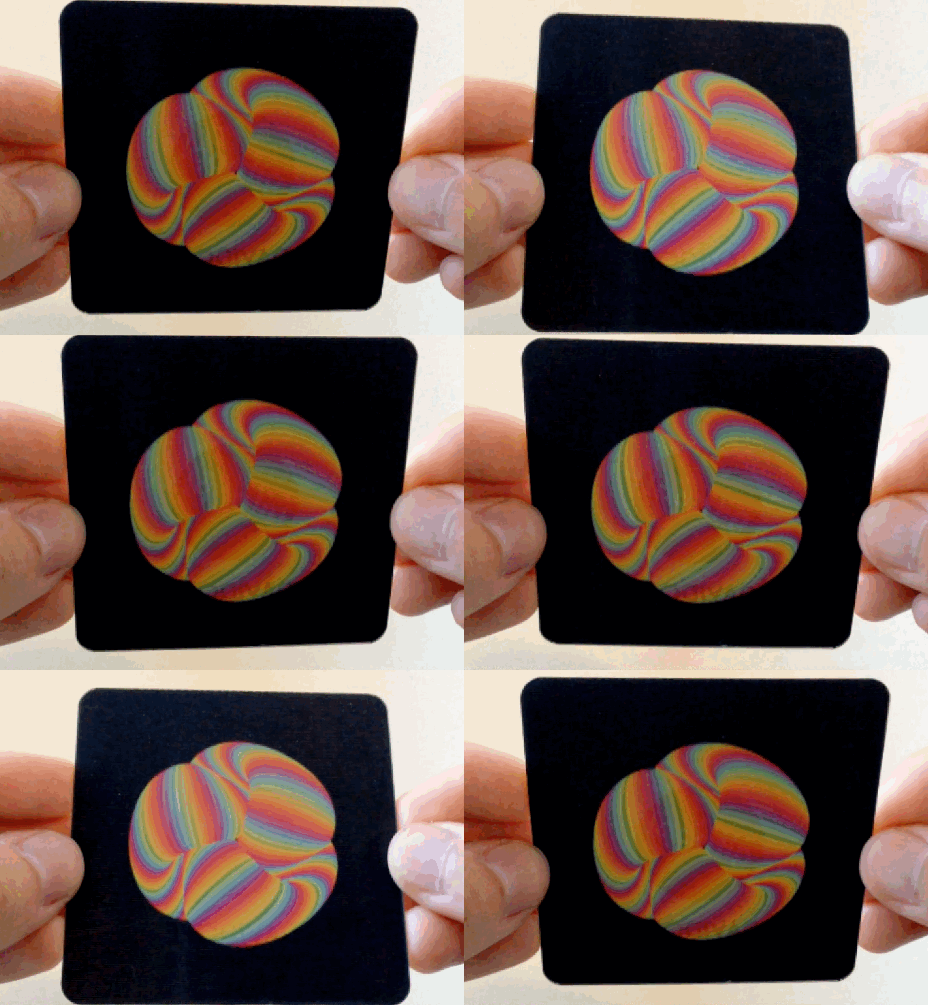
Gifpop! Everyone loves an animated gif. Well, I do. They’re particularly perfect for communicating specific emotions such as apoplectic rage, disgust or joy – often using scenes from films, TV shows or popular YouTube clips. Sites like the brilliant London Grumblr wouldn’t exist without them and online communities such as Reddit, 4Chan or Imgur – heck, the Internet – wouldn’t be nearly as much fun.

And no, it’s not just silliness.

Have a look at Zack Dougherty’s beautifully trippy gif art.

Source: Zack Dougherty

Problem of course is that these mesmerising, animated, forever looping, wonderful gifs only exists on digital screens.

Not for long though, as a Kickstarter project by @rachelbinx and @shashashasha that uses lenticular printing to bring gifs to life. Called Gifpop!, the service has already crushed its funding target of $5,000 less than 24 hours of going online – with over 400 backers donating over $15,000 (The Atlantic has more about how it all came about).

Can’t wait!

Source: Gifpop! Also, OMG, it’s a gif of a Gifpop!

Jonathan Perelman from Buzzfeed doesn’t like banner ads: Or, to quote him: “You’re more likely to summit Mount Everest than click on a banner ad.” From the Guardian’s take on Perelman’s speech at the the Abu Dhabi Media Summit 2013 – it sounded like many other people in the room agreed with his view that banner ads are (on the way) out.

He goes on to talk about ‘native advertising‘ – that dangerous amalgamation of content and advertising – an area that Buzzfeed excels in and has earned them 85 million unique visitors a month.

How do journalists use Twitter? Great little Q&A with @jenniferpreston about how to verifies Tweets when a story breaks and some of the principles she applies to source fast-moving stories.

Mobile or beer? Amstel, the Dutch Brewery company, has developed a clever little app that rewards you with free beer – if you don’t touch your phone for 8 hours. Called ‘Amstel‘, the app simply tracks how long you haven’t touched your phone.

Source: Amstel

Fast Company has more on the campaign – meanwhile, the question remains: could you go eight hours without touching your phone? (Or could you just turn it on when you go to bed and wake up to a free Amstel?).

Videos of the week: “Russell Brand, who are you to edit a political magazine?” So begins the interview on Newsnight between Jeremy Paxman and Russell Brand and my word is it good. That Brand is one eloquent customer.

Never not, part 2 – a beautiful 50 minute short film by Nike featuring some of the world’s top snowboarders, tricks, flips and a hell of a lot of snow.

A fantastic animation by Blank on Blank of an interview with Kurt Cobain on identity.

And finally: Workw*nkers

Internal brand ambassadors, gamification at work, the power of Google Maps and this week’s bits and bytes

Halloween is coming: They’re carving some pumpkins in the food centre, fancy coming along and making a Vine? Ummm… Yes! Off I went this morning to Sainsbury’s ground level food centre (yes, I love my job) and watched @BethanyJStone carve this gruesome scene of a Ghost Pumpkin eating a wee Munchkin Pumpkin.

We thought we’d have a bit of fun and encourage our followers on @SainsburysPR to tweet us a video, photo or Vine, showing us how they carve your pumpkin. Our favourite entry will walk away with a £50 Sainsbury’s voucher.

The first entries have come in already, and we’re saving them all in a spooky little Storify.

Socialise your people: A wonderful post by @anitaloomba about one of the most overlooked and underused resource in the corporate social media space: the people that work for your company. Why don’t companies empower their people to use social media for their jobs? Why block people from accessing social networks or blogs from work?

The answers take many forms: Everyone will just waste time on Facebook. They’ll give away company secrets. How can we control the message? Make sure that what’s being said is in line with company policy? But we have to protect our network’s bandwidth – what if everyone is just streaming clips from YouTube? Viruses. Hacking. Where’s my tin foil hat!

In the end they boil down to the fear of losing control. Losing control over people and over what they say.

Newsflash.

That control is gone. It started crumbling with the advent of the smartphone and continues to fall apart as people become more comfortable bringing digital into their lives because it helps them plan their lives, communicate with the people they care about – and wait for it – work more efficiently and collaboratively.

Three massively important things that you have to keep in mind when going social: training, encourage sharing, and lead by example.

Games are everywhere: While we’re on digital/social trends in the HR space, have a gander at an interview with Adam Penenberg – author of ‘Play at work: How Games inspire breakthrough thinking’ – about gamification at work and how some Fortune 500 companies are using games to engage employees.

What makes games so powerful?

“A good game gives us meaningful accomplishment, clear achievement that we don’t necessarily get from real life. In a game, you’ve beaten level four, the boss monster is dead, you have a badge, and now you have a super laser sword. Real life isn’t like that, right?”

Giving up on social ROI: An interesting story on Business Insider this week touting the death (how original) of social media ROI. Usually one of those that I ignore as click bait, but this one was shared by my friend @kaifischer who tends to not share (too much) rubbish.

The article is about a new report by BI Intelligence which shows that marketers are moving away from expressing the return on investment in social less in monetary terms and favouring metrics that speak to audience building, brand awareness, and customer relations: reach, engagement and sentiment.

I wish I was there: Buzzfeed picked posted a story about an Instagram feed powered entirely by photos taken from Google Maps. Sounds pretty mundane, but not through the eyes of graphic design student @mmeghan who scours the world for beautiful places on Google Maps.

There aren’t many places that the Google Maps cameras haven’t been…

In what essentially is a simple process, Meghan drops the wee yellow man on a location that’s been photographed, takes a screen shot, transfers the image to her phone, and uploads it to the I wish I was there Instagram, using one of the many filters.

View this post on Instagram

Interstate 10, Arizona, USA

A post shared by i_wish_i_was_there (@i_wish_i_was_there) on

Meghan’s eye for photography, composition and design clearly play a factor in her eclectic mix of images.

View this post on Instagram

Antarctica

A post shared by i_wish_i_was_there (@i_wish_i_was_there) on

Any airlines or travel companies looking to hire a social media manager out there listening?

View this post on Instagram

206 Rodovia MA-026, Codó, Maranhão, Brazil

A post shared by i_wish_i_was_there (@i_wish_i_was_there) on

Fight the Price: Hats off to the chaps at Co-op Electricals, who’ve come up with what I thought is an interesting twist on that old classic, a Twitter Retweet competition. Rather than just have people retweet a message to spread a message, the Co-op are allowing the number of retweets to push down the price of selected home electricals.

Twitter users are encourage to tweet something like: I’m driving down the cost of a Hotpoint Dishwasher with @thecooperative Electrical. Visit http://www.fighttheprice.co.uk to help #FightThePrice

fight the priceAs of this morning, I was tracking about 1,100 mentions of the #FightThePrice hashtag since it went live in September. From the three spikes, it looks like they’ve had three campaigns, all running for about a week – at which time they release a discount code that customers can then input on the ecommerce website and purchase the product.

FF Mark: One for typeface/design/Parallax scrolling aficionados. You’ll want a trackpad for this rather than a scroll-wheel.

Videos of the week: Last year Felix Baumgartner jumped from the edge of space and hurtled towards the earth – breaking the sound barrier on the way. The world watched as the event was broadcast live on YouTube. Relive those bonkers 10 minutes from the perspective of Baumgartner in this epic point-of-view video just released by Red Bull.

For more than a quarter century, Saroo Brierley searched for his family before finding his way back home with the help of Google Earth.

A spooky bit of baking magic from Sainsbury’s with this how-to video for a spooky Halloween pumpkin cake. If you think you’re up to the challenge, you can find the full list of ingredients and instructions on the Live Well for Less site.

And finally: Fullscreen Mario (only works on Google Chrome)

Twitter biogs, TV ratings, storms; and this week’s bits and bytes

Quiz time: How many Sainsbury’s basics blurbs can you match up with the product they describe? As you’d expect, Lee, Sainsbury’s basics brand manager, scored a perfect 10/10. I scored a respectable 7/10. More of a by Sainsbury’s shopper, me (HT @G3Bowden).

Not enough?

How about testing your knowledge of Ikea and black metal bands in this brilliant (and genuinely hard) ‘Ikea or Death‘ quiz (HT @a_little_wine).

The future of journalism: Katharine Viner, deputy editor of the Guardian and editor-in-chief of Guardian Australia, gave the AN Smith lecture in Melbourne this week. Her speech about journalism in the age of the open web is an absolute must read. And no, there isn’t a TL;DR version of this one.

Remember Mr Cake? You know, the chap that resigned from his job at the Stansted Border Force via a ‘resignation cake‘ in order to pursue his passion for baking and cake decorating. Well, he did go on to launch his own business and now he’s up for a Smarta 100 award for Best us of Marketing. Go on. You know you want to vote for him.

The Twitter bio – a postmodern art form: The key to Twitter is all about compressing your thought, insight or story into 140 characters. It’s a skill that – much like everything else – you learn through practice. The more you tweet, the better you get. But what many people don’t spend as much time on is their 160 character Twitter biography – along with the profile photo and background, the bit that let’s people know what you’re all about.

The New York Times takes a look at the art of the Twitter bio, from @HillaryClinton “Wife, mom, lawyer, women & kids advocate, FLOAR, FLOTUS, US Senator, SecState, author, dog owner, hair icon, pantsuit aficionado, glass ceiling cracker, TBD…” to @TomHanks‘ “I’m that actor in some of the movies you liked and some you didn’t. Sometimes I’m in pretty good shape, other times I’m not. Hey, you gotta live, you know?” – the article looks at pitfalls and cliches to avoid.

While we’re on short form content, here’s a great slideshare by @GinnyRedish about writing for the small screen. It’s well and good to think about responsive design for websites – but what does that mean for content?

Twitter is not real life (well, TV): An interesting bit of data published by Twitter and Nielsen this week shows that the most popular shows in terms of TV ratings and the amount of Tweets they generated do not correlate at all. as the Wall Street Journal points out, it shows that Twitter’s user base “has a very different makeup than the mass-market TV-viewing audience that marketers spend tens of billions of dollars each year to reach. Twitter’s 49.2 million U.S. users generally skew younger and are disproportionately in cities, for example, according to marketers and media analysts.” The full report is out on Monday.

Social is the new coffee-break: Many brands and companies have moved chunks of their budget from traditional marketing channels to digital and social channels. Nothing new there. At the same time, many corporate networks block access to the same social network. The schizophrenic relationship between a select group of individuals who have access to social and are creating beautiful content and social campaigns and with those who don’t have access from their work computer has always struck me as particularly bizarre. Why put all that effort into building a social media following around your brand if you won’t allow your own people to look at it?

Andrew Keen pulls together 5 reasons not to ban social media in the office. And what do you know – they all make sense!

  • It’s self-defeating – everyone has a smart phone, so they’re doing it anyway
  • Banning something that excels at undermining traditional hierarchies? Yeah, right.
  • It’s today’s version of the water cooler
  • Multitasking actually makes us more creative
  • Social media makes us more productive because it opens up our minds

Bullet Journal: For the past two weeks I’ve been using a note taking system devised by @rydercarroll called ‘Bullet Journal‘. Described as an analogue note taking system for a digital world, I thought the video was really well done and the system works perfectly to capture all those wee actions and events that make up my disjointed and disruptive day where I get pulled from meeting to tweet to discussion to blog post – all in the same hour.

I’ve moved away entirely from Evernote and my iPad and now only use this ‘old school’ system and I love it. There’s something to be said about that great satisfaction of ticking things off a to do list, but also for the elegance of how the Bullet Journal system also allows you to build specific pages for projects or collections, track events on a day to day or monthly basis. And all you need is a notebook.

The Twitterstorm: Hats off to BuzzFeed UK for pulling together their post on the 29 stages of a Twitterstorm – based on the recent kerfuffle around online retailer Price Hound selling a rather ill advised kids fancy dress costume.

From initial discovery, anger, confusion, boycott, petition, satire, trending on Twitter, the media catching up, politicians getting involved, social media expert analysis to the official apology – all in the space of a few hours – the post takes us through (HT @G3Bowden).

Scarlett Johansson Falling Down: A year ago, Scarlett Johansson was photographed falling down while filming in Glasgow for the sci-fic flick Under the Skin. It’s taken the Internet a year, but the resulting photoshop meme is rather worth the wait. Knowyourmeme looks at how it happened (the meme, not the fall).

Videos of the week: How do you promote a remake of the classic horror flick Carrie? By creating a telekinetic coffee shop surprise and scaring the pants off of some unsuspecting customers – all while amassing over 30 million YouTube views in four days.

Downside – the mobile app that will get you talking to your friends again.

And finally: The Penis Beaker that brought Mumsnet to its knees.

Social media 101, digital trends, Computerphile and this week’s bits and bytes

Social media 101: The Guardian is really getting into this social media marketing thing. They’ve launched a dedicated section on their website dedicated to the topic. A great resource if you’re starting out in social or just want to stay abreast of the latest developments without things getting too geeky.

As a brief selection, there’s a piece on how Twitter has become the marketing platform where people answer back, why you should think mobile when thinking social media and tips on how to manage reputation on social media.

And while we’re on the basics of social – an actually useful ‘how to do social media‘ post by @mycleveragency.

Twitter history: Quartz have published a great timeline of how Twitter has been described by the New York Times since it was launched in 2007 to present day. A nifty way of looking at how Twitter, but also the NYT’s understanding of Twitter has evolved over time from

“This short-messaging service allows you to ‘micro-blog’ your life in 140 character bursts.”

to

“…which started out as a way to post short bursts of text, is slowly but surely evolving into a media-rich and never-ending stream of information and entertainment that includes short videos, photographs and advertisements”

More proof that Facebook has lost its cool: The news that Facebook is losing younger members and no longer cool is nothing new. These claims have been backed up with data and analysis and I’ve written about them here before. If you still don’t believe it or want further proof then you should check out this splendid post on HuffPo about why the kids don’t like Facebook anymore.

Predictive search: Google Now does it, many other search engines, apps and companies are working on it. A clever set of algorithms look at a whole host of data about your likes and dislikes, behaviours and habits, personal information and what ever else they can get their hands on to give you something that you’ll only realise you wanted afterwards.

The New York Times looks at why some people see this is as the holy grail of marketing and others see it as the death of serendipity and privacy. 

Social media trends: This top notch presentation by @kpcb about social media in 2013 has been online for a few months now and in that time has been viewed over 2.4 million times. It explains brilliantly how mobile plays such a huge part in social and provides gratuitous amounts of stats on social for the next few years (US centric, yes, but still useful).

Some key bits:

  • Facebook and Snapchat are best for sharing photos. Instagram and Flickr are very far away behind
  • Video is still huge and only getting bigger: 100 hours of video are uploaded to Youtube every minute
  • Sound is catching up though: More than 11 hours of music are uploaded on Soundcloud every minute. The next big thing after sound: data
  • Despite all its reported trouble, the big blue social network Facebook is the biggest player, followed by Youtube, Twitter and Google+
  • The countries with the most prolific sharers: Saudi Arabia, India and Indonesia. Those more guarded about sharing their lives online: Japan, Germany and Hungary

Computerphile: I’m not sure how I’ve missed this before but let me introduce you to my new favourite Youtube channel. Übergeeks coming together and explaining in simple English some incredibly complex things that we all use every day but don’t really understand. Like browser cookies, email, the world wide web or the clip that got me onto this channel in the first place: How intelligent is artificial intelligence? Proper geekgasm stuff. Love it.

Branded accounts are people too: The wonderful @usvsth3m posted an enjoyable listicle about the woes of managing a branded social media account. Definitely one where other community managers and social media bods will empathise.

For me, my pet peeve is the usual reaction I get when I speak to people outside of marketing/comms about my job: “Hang on. You just browse Facebook and Twitter all day long. Can I have your job?”

Oh. And poorly executed user journeys based on QR codes. But that’s more than a pet peeve. That’s more like a deep rooted hatred.

Videos of the week: Based on the Cannes award winning public service announcement campaign ‘Dumb Ways to Die‘, a version featuring dumb ways to die while playing GTA V (and yes, they are very dumb, but they are so much fun. The GTA V ones. Not the real ones) has popped up on Youtube.

And two related clips, the first of a woman who quits her job with an interpretive dance to Kanye West’s ‘Gone’…

… and the response from the company she left.

And finally: How much does the The Daily Mail hate you

Airline Twitter shenanigans, iDamp, Lyric Videos and this week’s bits and bytes

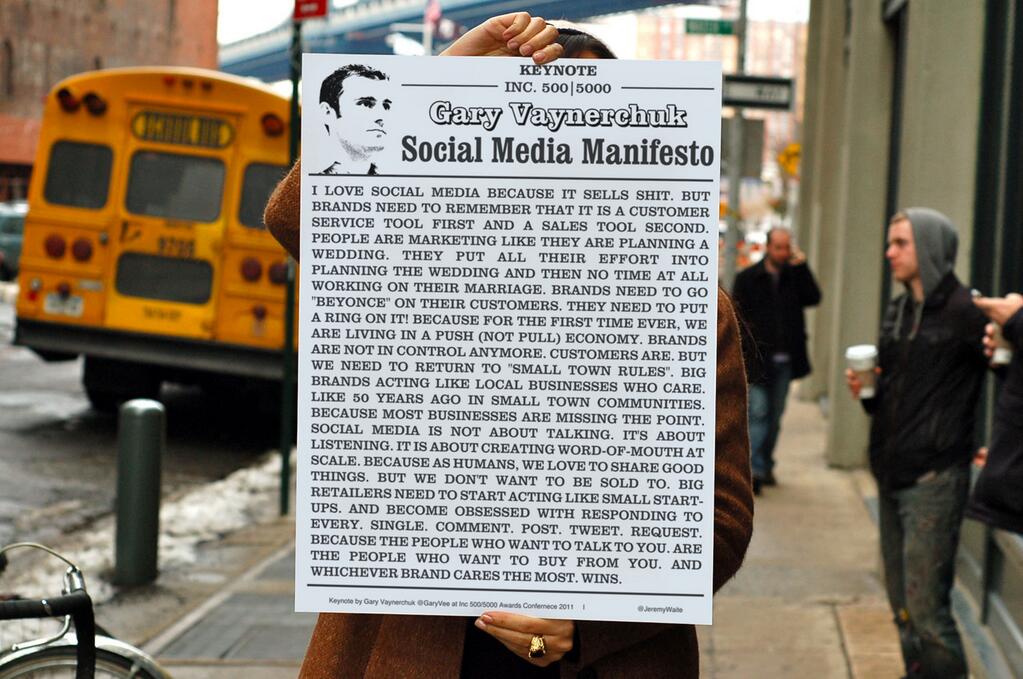
Social media insight: Social Media Week was on this week. I didn’t go to any events but I refer to @Garyvee‘s marvellous manifesto that pretty much covers the insight you can hope to garner from these events. Unlike these selections.

BU59bthCAAAyQywBudget Tweets, Part 1: This week, Ryanair Chief Exec Michael O’Leary announced at their AGM that the company would look to reform it’s abrupt culture and things that unnecessarily annoy passengers: “I am very happy to take the blame or responsibility if we have a macho or abrupt culture. Some of that may well be my own personal character deformities.”

Did this new found humility and focus on customer service prompt Europe’s biggest budget Airline to launch their own Twitter account? I don’t know. Their first Tweet was promising, showing some of that don’t-give-a-sh*t tone-of-voice they’re so (in)famous for.

Many RTs and responses followed – along with their second Tweet, a day later.

https://twitter.com/Ryanair/status/379944310029811712

Errr… right chaps.

By that logic, you haven’t quite grasped this whole social media thing and many other companies shouldn’t be on Twitter either. Do have a look at the responses to that Tweet – it’s telling to see what people expect from brands who come to Twitter.

I suspect that Ryanair won’t care too much about it… at least until they find a way for passengers to pay for the privilege of receiving Tweets?

Budget Tweets, Part 2: Meanwhile, Europe’s other budget airline also had a turbulent week on Twitter. EasyJet landed in some hot water when they stopped The Drum’s tech law columnist Mark Leiser from boarding a flight because he’d criticised the airline on Twitter.

The Drum have the whole story, here are the pertinent Tweets from Leiser and Easyjet (HT @TomParker81).

https://twitter.com/mleiser/status/382620916708282368

Tweetliner vs. Dreamliner: Completing the aeronautical Twitter theme this week is a rather nifty retweet competition from @BritishAirways, who pitted a Dreamliner and an Airbus A380 against a flight powered by Tweets tagged with #RaceThePlane. The competition was live for the actual duration of the actual flights (suspect they made sure they’d leave on time) and participants who tweeted using the hashtag had a chance to win free flights.

I’ve no idea how many tweets equate to a mile (the official microsite doesn’t seem to provide that info), but in both cases the Tweetliner beat its real-life competitor. The competition generated around 24,000 mentions of #RaceThePlane; the first flight peaked at a little over 8,000 and the second a week later at around 14,000. Reach, according to Sysomos, was around 132 million impressions generated from about 13,000 Twitter users. Not bad for the world’s first Twitter powered flight!

https://twitter.com/BritishAirways/status/382690657887719424

I share, therefore I am? A hypnotic animation from Simi Cohen about how today’s über-connected society could in fact lead to loneliness – even though the illusion of all our social media friends and followers would have us believe otherwise. 

Lyric videos: Remember, in the olden days, when you bought a CD and popped it in your Discman, and listened to your favourite band’s new album (Def Leppard, baby!), and then read the lyrics as the song was playing in the booklet (Pour Some Sugar On Me. They don’t write ’em like that no more)?

Good times.

Since then, the mp3 has killed the album and all we have are massive playlists of individual songs – and no idea what people are singing about.

The Internet looks to have come to the rescue with ‘Lyrics Videos’ – a bizarre, home-made sub-genre where fans combine the music and lyrics from their favourite song with their own footage. And according to the NYT, this trend is now so popular on Youtube, that artists like Maroon 5 and Katy Perry are producing their own lyric videos – often before their official music video is released to get interest in a new single going.

iDamp: Sad proof this week that some Apple fans aren’t terribly bright, when the online community 4Chan generated nine different fake Apple iOS 7 ads claiming the newly released mobile operating system would make iDevices waterproof

Screen Shot 2013-09-26 at 18.42.104Chan members took to Twitter to spread the word of this breakthrough new feature and troll Apple fans.

And yes, according to the reports, people actually fell for it!

In other Apple news: turns out the iPhone 5s’ fingerprint scanner was hacked by Chaos Computer Club. So much for that then.

Imgur beats Reddit: While we’re on slightly more left-field online communities, Buzzfeed reports that the image hosting service Imgur (built to support the online community and ‘front page to the Internet’ Reddit, because it didn’t provide its own image hosting service), now has more users than the community it was built to support. Even better: it doesn’t rely on venture capital and is profitable – unlike Reddit.

Correction of the year? From the Evening Standard.

Videos of the week: Jimmy Fallon and Justin Timberlake show us how using #hashtags in real life will make you sound like a complete and utter tool.

Adobe asks if you really know what your marketing is doing?

And growing London’s skyline (well, tourist attractions and train stations) with geo-tagged Tweets

And finally: Sh*t PR Ideas [hit refresh to see a new one]

Apple goes colour/biometric, Twitter IPO/future, Phoneblok and this week’s bits and bytes

#JSFishFinger: We have a winner. The honour and a £25 Sainsbury’s voucher for being @SainsburysPR‘s favourite Fish Finger Sandwich was awarded to @DomSoar for his epic fish and chips with homemade mushy peas on thick buttered white bread with tomato and Tartare sauce. We were impressed with Dom’s successful work in bringing together two classic dishes in a most precise fashion. Tasty.

Colourful plastic cases and fingerprint ID: The new Apple phones are here. Charles Arthur reckons that the 5c will be popular, even if it’s not as cheap as many had hoped. The 5s however is the model that the Apple fan boys will be most interested in. A faster processor, a new camera alongside some new photography functions such as ‘burst mode’ and ‘slow motion video’ will appeal to the Instragramers and Viners out there.

The reaction to the new iPhones on social was rather negative as WeAreSocial were quick to point out.  Mentions of the 5c were mostly negative, with 45% of conversations criticising its design and 36% questioning its price. The 5s in turn was mentioned 66% less than its predecessor the iPhone 5 a year go. The Poke has taken a less scientific way of looking at the social response – they’ve just picked some of the funniest Tweets.

The biggest reaction to the new colourful range of iPhone 5c however went to Nokia, who, while Apple’s event was still running, tweeted an image of their range of colourful Lumia handsets and thanked Apple for paying them such a huge compliment by copying their idea.

Apple’s share also took a hit as investors were unimpressed with Apple’s pricing strategy and the lack of a distribution deal in China.

One feature with the new 5s that does terrify me a little though is ‘Touch ID’, the fingerprint passcode function, where you can teach your new phone up to five fingerprints that will then unlock the phone and even work as a password for purchasing music through iTunes. Apple was quick to confirm that fingerprint data is not stored on any servers and that they will only ever remain on the phone. However, with a phone inherently connected through mobile networks or wifi, I’d think it only a matter of time hackers are stealing your biometric data along with your phone number and any other data stored on your phone.

Also, if your password is compromised – you can change it. But what happens when your fingerprint is compromised? You can’t change that so easily. Boing Boing looks at this paradox of using biometric data for authentication and why it may not be as safe as we like to think it is.

And what the hell does the S and the C stand for anyway? Speed and colour? Or Same and Cheap?

Anyway – what I’m really excited about is iOS 7, the new operating system that launches next week!

Twitter IPO and new features for verified accounts: Twitter has also been busy this week, announcing their long-awaited IPO with a tweet – how else?

Secondary sales of Twitter stock have valued the company at upwards of about $10 billion (that’s 10 Instagrams, fyi), so one thing that is certain is that it will create much excitement over the next few months and a number of millionaires when it finally happens.

That tweet came almost immediately after the IPO tweet, as Twitter moved to announce a new feature for verified accounts (the ones with the blue tick). The new feature will allow the Justin Biebers of the world to filter their interactions: they can chose to see all their @mentions, just the ones from other verified accounts, or those that Twitter deems relevant. The move is meant to encourage Twitter’s most popular users to stay active on the platform – although they might end up just speaking to each other rather than their fans (which in Bieber’s case would be fine by me).

Where will it all go? Well, The New Yorker looks at what Twitter could look like in the future:

  • Twitter will continue its transition from tech to media company
  • What’s coming next is a more graphically intense platform that is led by mobile
  • They will likely match the new iOS 7 operating system with a cleaner look – for example, the menu buttons for home, connect, discover and your profile will disappear in favour of an UI that ancourages users to swipe left and right

Phoneblok: As we all know though, a phone really only lasts a couple of years before it breaks or becomes obsolete. @davehakkens argues that even though it’s often just one part that fails, we throw the whole thing away since it’s nigh on impossible to repair or upgrade. Just thinking of my visits to the Apple Store and I realise that I’ve never actually walked out of there with a repaired or upgraded phone. I’ve always walked out with a brand new handset.

Hakkens has come up with the brilliant concept of the Phoneblok – a fully customisable phone that is made up of little blocks that all fit together – almost like Lego. A quite brilliant idea, the idea is in a conceptual stage at the moment, but going by the support it is getting, I think this might become reality sooner rather than later.

On the Internet, everyone has a friend: A great piece in The Atlantic by @emmaogreen about how the Internet isn’t a place where everyone shouts at each other. Rather, it’s a collection of lots of small places where people are chatting among themselves about topics that they are interested in.

“In other words, anyone can find other people who share her interests, no matter how obscure those interests are. These communities might provide entertainment, but they also provide a place for groups to coordinate and rally offline action. This is especially important because of the low cost of entry – people no longer have to have a printing press and/or a powerful company on their side to find allies and make their voices heard in a public sphere.”

Moving on nicely from what people talk about on the Internet to some research from Ipsos about why people share things on social media. Quite simply, to share interesting (61%), important (43%) and funny things (43%).

Instagram catching up with Twitter: The Hipster’s favourite photo sharing platform has just cracked the 150 million active users mark, bringing it ever closer to the 200 million active Twitter users. What better way to celebrate this milestone that to follow Sainsbury’s on Instagram?

Videos of the week: Guinness have come up with a rather clever way of showing the true meaning of friendship and loyalty – and what it means to share a pint with friends

Extra shows us the cheesiest gum commercial ever

And an ode to Lidl (via @Treebd)

And finally: Happy 15th birthday Google. Here are 15 things about Google you probably didn’t know.

Android KitKat, trolling BA, fish finger fun and this week’s bits and bytes

KitKat Android: The clever bods over at Google have launched an update to their Android mobile operating system. And as with previous versions (Cupcake, Donut, Eclair, Froyo, Ice Cream Sandwich and Jelly Bean), the new OS is named after a desert: KitKat 4.4.

The entire campaign is a no holds barred parody of Apple – not in itself a new idea, Samsung have done it in the past and Nokia have even parodied the spat between Samsung and Apple – but with this one you can really see that they’ve committed completely to not only shooting their ad in the same style…

… but the copy and product descriptions on the über-slick site built to showcase the future of confectionery is a pitch-perfect piss-take of Apple’s tone of voice and dictionary.

My favourite features of the new KitKat:

  • Works perfectly in portrait or landscape for a panoramic taste experience
  • Maximum breakability is guaranteed due to the refined praline software, crisp waferware and its unique chocolate unibody
  • It comes in 2 mega-bites, 4 mega-bites or a chunky-bite option

and, my favourite

  • Compatible with all liquid accessories

Screen Shot 2013-09-05 at 21.54.39

How much does this kind of a perfect partnership cost?

Nothing.

“This is not a money-changing-hands kind of deal,” John Lagerling, director of Android global partnerships, told the BBC. “The idea was to do something fun and unexpected.”

You’ll be able to buy special packs of KitKat Four-Finger and KitKat Chunky multipacks at Sainsbury’s.

Man buys promoted Tweet to troll British Airways: I’ve been flying regularly all my life and I’m lucky to say that I’ve never had my luggage go missing (writing this, I realise that my next trip is bound to be a disaster). I have however had many a ‘mare with Airline customer service. I’ve tweeted to complain but that tends to result in silence, stock responses or requests to call customer service numbers.

This week, British Airways passenger @HVSVN bought a promoted tweet after the airline had lost his baggage and hadn’t responded to his tweets for seven hours. After some rather snarky, nasty messages – borderline tolling, basically – the first ever promoted customer complaint made its way into the Twitter history books. Also, BA finally responded…

It doesn’t get better.

@HVSVN bought the tweet in the New York City and UK markets Monday night using Twitter’s self-serve ad platform. While he at first didn’t confirm the cost in media interviews, he has since tweeted the final cost and reach of the promoted tweet: 76,000 impressions for $1,000. Time has a bit more info on how @HVSVN went about targeting the tweets to make sure that it reached all the existing followers of British Airways.

Was it worth it?

That’s sooo 2006: The Guardian published their Media 100 list this week, a ranking of the most powerful people in the UK’s media landscape today.

Who came in at No.1?

I did.

Well, technically, so did you. All of us really.

An unbelievably unoriginal idea – after all, I’d already made it onto the cover of Time magazine as Person of the Year way back in 2006.

Source: Time Magazine

Communicating CR: With people demanding greater transparency, authenticity and accountability from companies than ever before, @SimonMainwaring writes that brands are increasingly taking three steps to respond:

  1. Sharing their purpose, core values and mission
  2. Moving sustainability marketing to corporate communications to tell the story of the good work companies are doing in ways that build their business
  3. Working with customers to fulfill the brand’s mission because they understand that “the future of profit is purpose, authentically executed”

New Yahoo logo: Yahoo updated their logo this week, after 30 days of changing the logo on their homepage to a different version. The familiar purple colour and famous exclamation mark remain – the later has been rotated to the right by exactly 9 degrees, which according to Marissa Mayer adds a bit of “whimsy”.

Source: Marissa’s Tumblr

I’m no typography expert so I don’t know if this is a good or a bad logo. But if you’re into that sort of thing, you should definitely give Mayer’s post about the relaunch a go where she ‘geeks’ about all the wee features and ideas behind the new logo. Quite frankly, I would never have picked up on any of them. I’m sure that a hell of a lot of work went into it and I think it looks good. But is it going to make Yahoo relevant to today’s web audience? For Flickr’s sake, I hope so…

Way To Safety: Mobile apps have become a part of life for many people. They help us organise our lives, check our email, find our way around town, figure out when the next tube is due, post updates to our friends, hurl birds at naughty piggies. Increasingly, augmented reality and layers of data are added to make apps even more powerful and helpful – possibly even to a such a degree that they could literally save your life.

Way To Safety is an app currently in development that  would help civilians steer clear of gunfire in urban warfare environments:

“Within 30 seconds after a shot is fired, the application will determine the source location of the shooter, the direction he was aiming at, the type and caliber of the weapon used and the number of bullets fired. This data will be sent to the nearby residents for free and we will also send it to the army, paramedics, press.” 

Terrifying and brilliant at the very same time (HT to Simon French for this one).

Fish finger sarnie challenge: Sainsbury’s new ad featuring by Sainsbury’s Fish Fingers kicked off a bit of a discussion on Twitter this week. Turns out that not everyone would stack the fish fingers like we did!

So, we decided to open it up to the weird and wonderful people of Twitter and asked them to show us how they make a fish finger sandwich. Our favourite photo, video or Vine stands to win a £25 Sainsbury’s voucher.

There’s already some good efforts coming through, some even made without any bread or fish fingers. We’ve had saucy combos, little umbrellas and even the inclusion of cheese, bacon and onions.

So if you fancy a go at the classic fish finger sandwich, tweet a photo or video with #JSFishFinger and you could be in the running for a £25 Sainsbury’s voucher.

Here’s @SainsburysPR‘s humble entry (with huge thanks to @a_little_wine and @TillieSeymour):

Video of the week: LG uses their ultra-realistic TVs to scare the wits out of poor job applicants. Brutal really – after all, they’re all leaving that room no closer to a job.

And finally: What Bale Earns

Blog at WordPress.com.

Up ↑