Search

Bits and Bytes

Thoughts on digital, running rambles and photos

Amazon Prime Air vs. Waterstones’ OWLS, Christmas Tinner, SpaghettiOMG and this week’s bits and bytes

Amazon Prime Air: The perfect PR stunt timed to coincide with the craziness that is Black Friday and Cyber Monday. It gets people to think less about naughty Amazon (workers’ rights, working conditions in fulfilment centres and tax) and more about innovative Amazon. As Bloomberg notes: “The aerial drone is actually the perfect vehicle—not for delivering packages, but for evoking Amazon’s indomitable spirit of innovation.”

The goal of this new delivery system is to get packages into customers’ hands in 30 minutes or less using radio controlled drones. However, Amazon are quick to point out that putting Prime Air into commercial use will take time – mainly for the tech to mature and for FAA regulations on unmanned aerial devices to change – so don’t expect any drone deliveries anytime soon. The Guardian was quick to add their long list of problems with the idea.

The Internet, as ever, was quick to respond:

The best response however has to be from Waterstones, who reacted brilliantly to announce their Ornithological Waterstones Landing Service, or O.W.L.S. for short. As with Amazon Prime Air, this service will take years to get off the ground, as it takes a long time to teach Owls anything and, well, as appropriately named Waterstones spokesperson Jon Owls confirms, the retailer only just came up with the idea.

Christmas dinner in a can: The clever bods at Game have launched an ingenious product for dedicated gamers this holiday season: all your Christmas Day meals layered into one tin, from your scrambled eggs for breakfast, a couple of mince pies, the turkey dinner (there’s even a version that substitutes broccoli for sprouts), to, of course, the Christmas pudding. This spectacular culinary innovation comes after Game found that 43% of gamers in the UK intend to spend the majority of the holidays on their consoles.

Predictably, this £1.99 tinned temptation has caused outrage with The Mail calling it ‘stomach churning‘, while over at the The Metro, the Christmas Tinner has inspired a Buzzfeed-esque listicle of 10 foods that should never come in a can – after first reporting on the story without finding any offence a mere 24 hours earlier.

The Telegraph so liked the taste of this story, they must have dug into the habits of gamers at Christmas and found some ‘research’ by Dominos claiming that gamers will do almost anything to carry on playing: “almost half of male gamers admitted they have turned down sex to continue playing, while a fifth of female gamers said they had missed weddings and hen dos.”

Right.

According to The Mail, the product was trialled in Game’s Basingstoke store, and the gaming retailer plans to sell it in stores across the country if there is enough demand. Den of Geek meanwhile reported that the meal is available online. I am investigating – no response from Game yet.

SpaghettiOMG you said WHAT? It can’t be easy doing social for “a brand of canned spaghetti featuring circular pasta shapes in a cheese and tomato sauce and marketed to parents as ‘less messy’ than regular spaghetti.” But, the brave marketing bods at SpaghettiOs have managed to gain over 10,000 followers on Twitter, half a million Facebook likes.

Looking at their recent posts, the excel at creating tenuous links between their brand and favourite board games from the past, Thanksgiving and even Movember. These posts generate on average a couple of dozen interactions with their fans on Twitter and a few hundred on Facebook.

Having shown that they are a brand with their finger on the pulse, they thought they’d commemorate the bombing of Pearl Harbour on 7 December 1941 by the Japanese with this spectacular image of their brand mascot TheO holding aloft the Stars and Strips as it flutters in a patriotic breeze (HT @tomparker81).

Screen Shot 2013-12-07 at 09.09.50

This post got a few more retweets and favourites than some of their earlier posts – and from the looks of it has already been removed from Facebook.

Worry not, the helpful denizens of Twitter are on the case though, suggesting some more historic events that @SpaghettiOs and TheO could commemorate:

*Update*

The Tweet has finally been removed and @SpaghettiOs have apologised

Facebook ups post quality: Facebook is tweaking its news feed algorithm to deliver “high-quality” content to people based on what their past behaviour on the platform. According to The Verge, Facebook wants to promote better content such as news articles instead of memes and over-shared viral content.

It’s all a bit shady as to what Facebook deems high quality content to be – to me it sounds like they’re looking to get more of a news driven feed à la Twitter and not just the viral crap (and baby photos? Please tell me baby photos will be filtered out?).

How to know when a post will go viral: While we’re on quality posts, the WSJ this week wrote up a feature on a chap they call the world’s most influential blogger. Neetzan Zimmerman writes for Gawker, posts a dozen times a day and almost every one of his articles goes viral. The piece looks at his system and thought process when picking stories to focus on, likening it to a biological algorithm:

The whole process happens very quickly. “Within 15 seconds, I know whether an item is going to work,” Mr. Zimmerman says. He usually has a headline ready to go a few seconds after that. “It’s a biological algorithm,” he says. “I’ve put myself into the system—I’ve sort of become the system—so that when I see something I’m instantly thinking of how well it it’s going to do.” Indeed, Mr. Zimmerman says he can no longer tell the difference between stories he finds interesting and stories that will be popular. “If it’s not worth posting then I’m not interested,” he says.

The secret then? Looking the story that plugs into the Zeitgeist of that particular day and elicits and emotional response that cannot be denied and competes people to share a story. Also, with Zimmerman’s post generating around 30 million page views a month – this article may also be the best CV ever posted.

Oh, and if Gawker isn’t your thing, The Evening Standard visited Buzzfeed UK for a lengthy feature on what you need to know about the social news site.

Instaforce: Star Wars this week joined Instagram with an image of Darth Vader taking a selfie (know your audience!). Since then they’ve posted a mix of behind the scenes photos from the original trilogy and the distinct lack of Jar Jar or material from the new trilogy does lift the spirits that the upcoming Disneyfication of the franchise might not be as crap as Episodes I-III.

The Force is strong in this one.

Videos of the week: To show that customers get quality advice and top value for money at camera retailer Jessops, Peter Jones dons a dodgy disguise to play a bumbling sales assistant. It shouldn’t work, but it does (although, as @a_little_wine pointed out when she sent this to me, the daily giveaway of a camera will have helped the #beardeddragon hashtag to trend on Twitter).

You may have seen what’s been billed as the most realistic finger painting in the world – a portrait of Morgan Freeman by Kyle Lambert. This clip of the painting taking shape is a mesmerising look at 200 hours of work in three minutes.

The film ‘Anchorman’ was so bad, I stopped watching after 10 minutes. Which is why I’m dumbfounded by how there is such excitement about the sequel coming to cinemas soon. You have to give it their PRs though, who organised for Ron Burgundy to co-presented the Sunday evening news show on KXMB in Bismarck, North Dakota alongside regular news anchor Amber Schatz.

And finally: Social Santa (HT @a_little_wine).

Christmas in a Day is here, KLM excels at social customer service, pay with a selfie and this week’s bits and bytes

Christmas in a Day: The trailers had racked up over 1 million views on Sainsbury’s YouTube channel by the time I was fortunate enough to attend the premiere at beautiful BAFTA House alongside the film’s director and the many stars of the 47 minute feature made up entirely of user-generated content.

A true roller coaster of emotions, I found myself happily giggling away one moment and simply dissolving into tears the next. A genuinely heartfelt, charming  and entirely authentic look at Christmas in the UK.

Why this shepherd loves Twitter: A marvellous essay by @HerdyShepherd1 about why he loves Twitter. A self-confessed luddite and shepherd in the Lake District, Herdy admits that he never would have thought he’d take to Twitter. It was only after he upgraded to a smartphone with Twitter installed that he succumbed to the little blue bird’s charms.

“I suddenly had a camera and Twitter app in my pocket whilst I worked. And though it took me a while to realize it, I had the tools to connect to thousands of people around the world. I could now defend the old in my own quirky and probably misguided way.”

A charming read and well worth the follow.

How to do a Twitter Q&AEconsultancy looked at seven recent Twitter Q&As by brands that proved to be useful in one way or another. They key points they seem to make about what a brand should consider before agreeing to a Twitter Q&A:

  • Get your other Twitter accounts and platforms to promote the Q&A hashtag
  • Stick to your hashtag – it makes it easier to track questions and also potential reach
  • Don’t invite people to ask you question when you’re having a bad news day
  • Collect questions in advance of the Q&A via the hashtag, Facebook and email
  • Use a service like Storify to curate the Q&A so that you have a record of it for later

Transparent customer service via Twitter: @KLM now provides a live update on how long they expect it’ll be before they respond to queries. You’ll see this information when you make your way to KLM’s customer service centre and also directly on their Twitter profile. Really impressive stuff from a company that’s always pushing the boundaries on social and digital media.

Screen Shot 2013-11-28 at 20.54.07

Pay with a selfie: Last week I shared with you my thoughts on the word selfie making it into the dictionary. The South African retailer Urban Hilton Weiner went a step further to celebrate the new official word and launched a one-day campaign encouraging customers to share a selfie of themselves wearing some of the brand’s clothing in order to in order to contribute to their payment.

The hashtag #UrbanSelfie quickly saw a number of in store customers tweeting, Facebooking and Instagraming their outfits from inside the store’s changing rooms for a chance to win some money.

https://twitter.com/arabellazz/status/404573185934635008

Clever URL shenanigans: I don’t understand a great deal about Eggball other than there’s some sort of World Cup going on, England lost (as usual?) and the All Blacks are both terrifying with their pre-game Haka and also nigh on invincible.

Videos of the week: Ze Germans and Adidas celebrate their new footie kit (whether they’ll actually win anything in Brazil remains to be seen).

You won’t look at Jelly Beans the same way after watching this short film.

I have a feeling that Harvey Nichols’ ‘Sorry, I spent it on myself’ campaign might make secret Santa that little bit less festive (HT @LisaJHarris).

And finally: The brilliantly bizarre Miley Cyrus – Wrecking Ball (Chatroulette Version) has racked up over 31 million views in two days (HT @a_little_wine)!

Little Saino’s Stories, BA looks up, an ode to the selfie and this week’s bits and bytes

Little Stories, Big Difference: Often it’s little things that make a big difference. At Saino’s, those little things are often what customers don’t see, so we thought the best people to tell these stories would be our colleagues. Together with our Internal Comms and product teams, we worked with @SAS_Creative and @Green_Lions to create over twenty microfilms: all speaking to the value of values and all featuring our own colleagues. The first ten of these films are live now on our corporate site.

From reducing packaging, to homing bees, and tracing the origin of our bread – I really do think that these films go a long way in bringing our values and sustainability commitments to life in a customer friendly and playful way.

Meerkat moment: At this week’s Marketing huddle, @PoppyShute talked about the Coca Cola ‘Small Worlds Machine’ campaign. Poppy was kind enough to write a quick summary of Coke’s campaign:

This award winning online video campaign communicated the optimistic and feel-good message that what unites us is stronger than what sets us apart, and the result was an incredibly touching video that went viral on You Tube, with 2.4 million views to date. In March this year, Coca Cola set out to connect the people of India and Pakistan – communities only several hundred miles apart, but separated by decades of political tension and mutual hostility. Using state of the art, touch screen vending machines that acted as ‘live communication portals’ in Lahore (Pakistan) and New Delhi (India), they invited consumers to put their differences aside, complete an interactive task togehter, and share a simple moment of connection over a coke.

This is a great demonstration of a company using new technology to great effect, being locally relevant, and building brand values much bigger than just their product. Brace yourself to feel a bit teary.

#LookUp: A digital screen, live flight information and a wee clip of a nipper pointing up at the sky. Three rather simple elements that @British_Airways have brilliantly combined to deliver ever-changing billboards under the flight paths around Heathrow Airport. Such a powerful idea – after all, who hasn’t sat there looking at planes flying overhead and asked themselves the question: “I wonder where they’re going” (HT @G3Bowden).

Word of the year: “Selfie” has been named as word of the year by Oxford Dictionaries. The official definition:

A photograph that one has taken of oneself, typically one taken with a smartphone or webcam and uploaded to a social media website: occasional selfies are acceptable, but posting a new picture of yourself every day isn’t necessary

The self-portrait has always been a part of art, Van Gogh created many self-portraits in the 1800s (he loved that straw hat) and when photography was invented, the obligatory mirror photo wasn’t too far behind (if Kubrick does it, it’s gotta be OK). Fast forward to today, and you’ve got Jon Snow Vining about the news

I’m sure that anybody with a camera has taken a self-portrait. Either with a front facing camera on a smartphone or the classic out-stretched-arm-click-and-hope snapshot. The Telegraph’s claim that ‘no man should ever be caught taking a selfie‘ is utterly daft and ignores years of art history.

Gratuitous use of one of my self-portraits in conjunction with some of the greats. I have no shame.

Perhaps it’s to do with the word ‘self-portrait’ bringing with it a certain level of artistic expectation. A selfie on the other hand feels more of the moment, more fleeting. The Oxford dictionary notes in its definition that a selfie is typically taken with a phone or webcam – by that logic, a photo taken with a proper camera is a ‘self-portrait’, not a selfie. Phew).

I suspect however that the problem with selfies is not so much their existence, but more about that most horrible of poses, the “duck-face” and those people that keep posting a new profile photo to Facebook every five minutes.

But then there’s a new horror on the horizon: The Sparrow Face.

A couple of guys a trend doesn’t make: Stalking the rich is a simple hobby nowadays with social media platforms allowing you instant access to celebs and their lives. The Mail has picked up on a “trend” where rich Arab who accessorise their obligatory super cars, powerboats and mansions with lions and cheetahs – photos of which are then posted to Instagram. Now, the images are no less bonkers and animal rights activists are bound to be up in arms about this, but what I love about this story is that The Mail shows a whole page of photos from two of these rich Arabs (HT @HelenRI).

http://instagram.com/p/cbTVRzgFwp/

View this post on Instagram

Simba ♥ ♥ #lion

A post shared by Humaid Abdulla Albuqaish (@humaidalbuqaish) on

Clever Hobbitses: Those chaps at Google have put out another one of their Google Experiments – a must see for any Tolkien and The Hobbit fans out there. An interactive map of Middle Earth, featuring characters and locations from the upcoming ‘The Desolation of Smaug. A taste in the video below (epic soundtrack included) and this way to Middle Earth (seems to work fine on Safari too).

Beware of who you follow: The Register gleefully pointed out this week that David Cameron’s Twitter account @Number10gov was following a high-class escort agency on the social network. Suspect that the social media manager who runs the Twitter channel received a bit of a bollocking (HT @a_little_wine).

Twitter motors on: They’ve launched a considerable revamp of their mobile app. Interestingly though, they seem to roll out slightly different versions to different groups of users, test which ones work best and then go with the most popular option. Techcrunch has some more on this agile, highly iterative and data-focused platform roll-out strategy.

Twitter this week also rolled out their Alerts feature to the UK. Rachel from @AllThingsIC has a brilliant round-up of what you need to know.

Videos of the week: My favourite film from a series of three that tell the story of Sainsbury’s relationships with some of their suppliers. The Cow Whisperer is about how our Dairy Development Group works with over 300 British dairy farmers to help them look after their cows and secure a long future for their British Farms.

What do you get when you cover The Beastie Boys’ ‘Girls’, construct a colossal machine out of girls’ toys and film it all in the style of ‘OK Go’s ‘Needing/Getting’. Over 6 million views on YouTube in just a few days for an ad by toy company GoldieBlox and perhaps a generation of girls that will grow up to be engineers.

And finally: Histagrams

#ChristmasInADay, custom timelines in Twitter, JCVD’s epic split and this week’s bits and bytes

Christmas in a Day: I grew up with Christmas in the tropics, a plastic tree, a Nativity that we assembled every year. On Christmas Eve it’s always mum’s super-special, home-made salmon pate and deviled eggs and other tasty cold cuts before we all rip into our presents (yes, in Germany it’s the Christkind that brings the presents, and as with many things in Germany, the Christkind is efficient and delivers things a day before Santa gets around to homes in the UK).

162_8264111783_3419_n
Decorating the Christmas tree

I’ve had the pleasure of celebrating Christmas with @tomparker81 and his wonderful family – who introduced me to the wonders of a cheeky Baileys (or three) before Christmas lunch. Then there’s my lovely future in-laws who – year after year – look to get the biggest Christmas tree available. Last year, my brother came over to London from Berlin and we celebrated Christmas by watching some festive footie and heading off to the pub for a Christmas lunch.

The point I’m trying to make is that every family has their own tradition and way of celebrating Christmas and that is exactly what Sainsbury’s have highlighted in their stunning new TV campaign for the festive season, the film Christmas in a Day.

From the fantastic kid, to the radiator keys, to Twitter’s new favourite, Spreadsheet Man – these 3:30 minutes are full of laughs, giggles and right at the very end, it takes such an emotional turn that I still well up.

The full length film airs on 29 November on YouTube and who knows, it might become a Christmas tradition in some households across the country. If you can’t wait until then, there are some more trailers on Sainsbury’s Christmas hub and there’s a great blog post by @MarkJGiven on the story behind the campaign and how it came about.

Screen Shot 2013-11-14 at 21.54.02

Right, right, right… what about the reaction then?

Monumental would be one way to describe it. I was lucky enough to be invited to AMV’s offices for a little launch party for the trailer’s first airing on ITV – taking up the entire ad break on Coronation Street.

It was brilliant to have a room full of chatty, happily knackered advertising, comms and marketing people from AMV, PHD, Blue Rubicon and Saino’s go quiet when the ad started – only then to hear them gasp, woop and cheer at the immediate and massive reaction to the trailer on Twitter.

A quick look at the Buzzgraph for mentions of “Sainsbury’s Christmas ad” shows that words such as “emotional”, “amazing”, “tears”, “crying”, “lovely” and “cute” are being used in combination with the clip.

There are also some rather high profile fans…

… but the star of the trailer however has to be Jonathan ‘Spreadsheet Man’ Proud who has clearly struck a chord with a lot of viewers:

https://twitter.com/Chardeedaa14/status/400955997868793856

Some people would be happy to have him over for Christmas

https://twitter.com/sam_bessant/status/400984242056089600

And it wasn’t long until people were calling for the actual spreadsheet

For those who are interested, The Telegraph’s @Steve_Hawkes has the details

The Co-op were very happy to have spotted some of their Christmas puds in the Spreadsheet Man bit – leading them to tweet our ad to over 30k of their followers.

The Saino’s response was relaxed…

… but Ian Burrel from the Indy said it best in his piece titled “Why Sainsbury’s featuring Co-op items is a triumph for Christmas adverts

“In the manipulative world of modern television – where content is so often subject to the brand police and the political spin doctors – it’s nice to know that the “real life” footage used in Sainsbury’s Christmas in a Daycommercial is just that.”

Proud to be a part of it

Some of the most powerful responses though have come from our own colleagues. Not only is their reaction overwhelmingly positive, but colleagues from around the country are saying how proud they are to be a part of Sainsbury’s. I think it’s a testament to Sainsbury’s Internal Comms team and to all those lucky few who were able to go along to Sainsbury’s annual colleague conference two months ago to be among the first in the company to see the footage and NOT SAY A WORD about it and that the story didn’t leak.

https://twitter.com/delboy2510/status/400885199418167296

Bloggers – full disclosure: Last week, I wrote about why we work with bloggers at Sainsbury’s. Interesting then to see a post on the ASA’s website reminding bloggers of the advertising guidelines that “any blogger who is paid to write positive reviews or comments about a product or service that they must be up-front with their followers by making clear that it’s advertising.” Turns out the ASA has been receiving feedback from bloggers that some social media and PR companies are apparently offered them money to advertise on their behalf while encouraging them not to declare that they’re doing so.”

Who’s in trouble when this happens?

“Under the Advertising Code, although the blogger would be named as part of any ASA investigation into misleading advertising, ultimately the buck would stop with the advertiser. If a paid for entry on a blog wasn’t disclosed we would investigate the advertiser and hold them accountable.”

So, be good and encourage the bloggers you work with to clearly note what kind of incentive they received from you.

Custom Timelines: Storify took a deep breath this week when Twitter announced a new feature that allows you to build a Twitter feed  by picking certain Tweets. The interface is still very clunky and basic functions like sorting these so called custom timelines chronologically doesn’t yet work (or at least I couldn’t figure out how to do it) and it seems to only work via Tweetdeck – but, it’s a move in the right direction and one that I think will worry Storify (aka the social curator’s tool of choice).

So, what can you do with them? Well, the chaps at Twitter have pulled together a custom timeline of, yes, you guessed it, custom timelines!

How much does Twitter owe you? Time built a wee calculator that analyses your Twitter handle and determines how much Twitter owes you after their IPO (if you lived in imaginary fairyland then you might have a case – sadly, this is just a silly tool). Apparently I’m owed a meagre $134.

Twitter is a weird and wonderful place: Sometimes, the stars align and people come together and create something wonderful. Even if it was started by @TescoMobile, this is up there with best Twitter thread of the year (and yes, you need to open this link in your browser to appreciate why this is every social media manager’s dream).

Tumbling Tesco: Continuing on with the Tesco theme, this week sees two brilliant Tumblrs about Tesco. First there’s ‘Worst Place on Earth‘, a masterpiece of Comic Sans and ALL CAPS outrage at the horror that is the Tesco Express in Haggerston and then we have the direct opposite, a love letter to the St. Tropez of Tesco Express in North Poole.

New technology: A marvellous list by XKCD of simple answers to questions about how the next big technological development will impact our lives.

Source: XKCD

Video of the week: Jean Claude van Damme helps Volvo demonstrate the precision steering capabilities on their lorries by pulling off this epic split. And yes, it’s all real.

And finally: Meet @JohnLewis, the nicest, most patient man on Twitter (and no, he’s not a PR stunt, and yes, @JohnLewisRetail have responded).

Blogger relations, changes at Twitter and Facebook and this week’s bits and bytes

Tasty blogger relations: At Sainsbury’s, we cultivate a tasty relationship with around 100 food bloggers. Our delicious community is full of food obsessed people who love nothing more than rising to culinary challenges ranging from creating something with our by Sainsbury’s ready rolled puff pastry or sharing their kitchen hero recipes with us.

More often than not, @a_little_wine and I will sit there going through coverage alerts and fight the urge to lick our screens, so scrumptious are the creations from the community.

We refer to them as our food blogger community – but you could also refer to them as brand advocates. Which is why I thought this post about the power of brand ambassadors was a great summary of what these kinds of communities can do for a brand: generate trust, credibility, engagement and impressions – and I’d add a fifth to the mix and that would be high quality content. We regularly share creations from the community with our Twitter followers to inspire them to try a new product or recipe they might otherwise not have come across.

#TwitterIPO: Twitter’s share price went from the initial public offering price of $26 to $45 within minutes after shares were finally made available on the New York Stock Exchange. That means the company went from being worth $18bn to a wee bit over $30bn. CNBC reckons it’s worth exploring Twitter’s business model and prospects and whether “a community of ephemeral messaging” can morph into a serious, profitable venture.

Storify + Twitter: My favourite development of the week (besides Arsenal beating both Liverpool and Dortmund) comes from Storify. The go-to-tool when it comes to curating the web in just a few clicks has just made it easier to then share your digital collages with your followers by allowing a sort of slide show to embedded into Twitter. Extremely nifty and an excellent way to take advantage of Twitter embeds as it effectively allows you to go waaaaay over the 140 character limit in one tweet.

Who better to demonstrate than President Obama himself.

Is Facebook’s walled garden coming down? Facebook and Twitter are coming ever closer in functionality, freely copying features from each other. Facebook adopted Twitter’s hashtags, Twitter adopted Facebook’s way of displaying links. Twitter copied the share button with its retweet button. Twitter also copied the idea of the favourite button from Facebook’s like button. Twitter even copied the idea of an IPO. Sheesh.

The one big remaining difference between the two networks though is that they are at different ends of the public vs private scale: On Facebook users tend to share a lot of personal information with a smaller group of friends, while on Twitter users share very little personal information with pretty much anyone.

That big difference might be changing with Facebook’s announcement this week that it is removing an old setting called “Who can look up your Timeline by name.” This will mean that anyone will be able to look up your Facebook profile using your name and see what they already have permission to see. Facebook explicitly states that “removing this setting doesn’t change who can see your photos, status updates or other things you’ve shared.”

I do hope they keep that point of difference alive – I know I will be keeping my eye on Facebook’s privacy settings quite closely when this feature rolls out soon. Inside Facebook has a 5 step guide to protect your Facebook privacy (for what its worth).

The thumbs up gets the axe: Say goodbye to the Facebook thumbs up – the iconic symbol for digital approval is getting the chop, in favour of a more corporate and cold Facebook F. The change will happen over the next few weeks, according to the Facebook developer blog.

Source: Facebook

Books still relevant to youth shock: In my final year of high school, I received a pager for Christmas. I was well chuffed. No my friends could call my pager and I would see the number and I could call them back. We developed codes. 999 meant call me back immediately. 143 meant I love you. Yes, we spelt out boobs. It was the first portable digital screen in my live and it was awesome.

Fast forward to today and 17% of children in the US under the age 8 use a mobile device at least once a day. This stat comes from a recent Common Sense media study. If anything, I’m surprised (and relieved?) it isn’t higher and that books still play such a big part.

Hang on, I’ll get you some ice for that burn: Pepsi celebrated Halloween last week with some creative depicting a can of Pepsi dressed up as a can of Coke. The line reads: “We wish you a scary Halloween”.

In response, Coke quite brilliantly used exactly the same image, but changed the tagline to “Everyone wants to be a hero”.

Ouch.

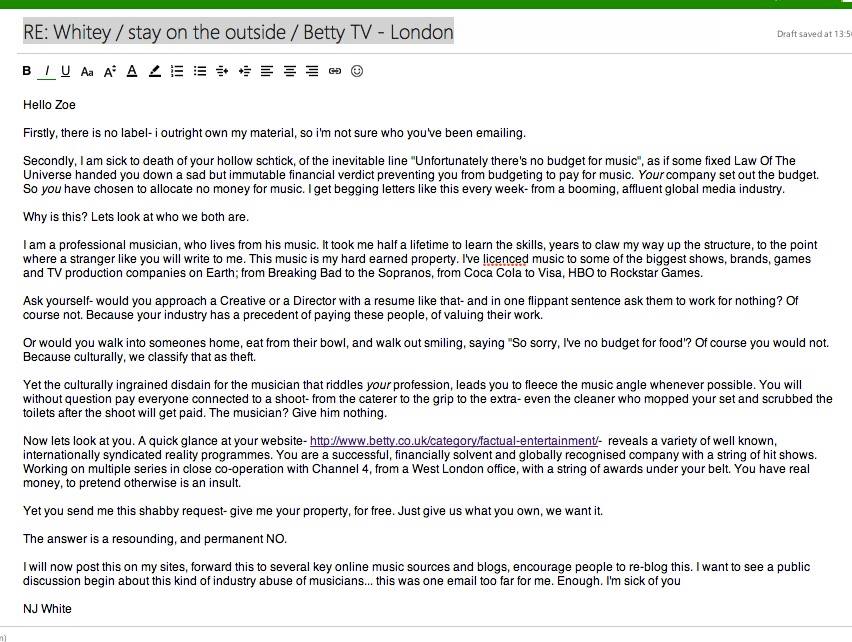
While we’re on burns: Betty Productions ask musician Whitey if they can use his music in a new TV show for free as there is ‘no budget for music’. He, um, declines (HT @tomparker81).

Video of the week: Meet the Footbonaut, a 360-degree-ball machine that fires footballs at players from all angles, requiring them to control and dispatch the balls into the appropriate square. Cutting edge technology currently in use at Borussia Dortmund – but still not as good as having an on-fire Aaron Ramsey in your team.

And finally: Hats off to @TescoMobile for the masterclass in Twitter sass (it’s OK. They only made it into Buzzfeed. We made it onto Time Magazine, thanks to @tomparker81).

Teens on social, the myth of the digital native, how we shop and this week’s bits and bytes

Facebook had a mixed week: While it beat analysts expectations by reporting $2 billion in revenue, the news that led coverage was the fact that young teens are using the site less. The following slide from The Huffington Post makes for worrying reading for Facebook. The amount of teens rating the social network as important has dropped from 42% to 23% – but not to worry too much: Instagram is up from 12% to 23%. Also, it’d really be interesting to know what that ‘Other’ category is made up of.

Mind you – if the Giraffe profile pic game is so popular on Facebook that it merits an article in the Telegraph, I’m not surprised teens aren’t too impressed anymore (HT @a_little_wine).

I jest – but while Instagram is growing in importance for teens, it still isn’t as important as Facebook. Perhaps then, there are different forces at play here?

Generation Analog and the Myth of the Digital Native: An fascinating article on Mobile Youth takes an ethnographic look at human interaction, arguing that an online interaction will never be able to pass on as much unspoken or unwritten information as a face-to-face interaction.

“Offline is the moment of truth. When it comes to the jugular issues of trust and emotion, you can’t cheat the offline world.”

The piece goes on to talk about how our mobiles are the perfect link between our online and offline lives – perhaps an explanation of why platforms such as Instagram, Vine or Snapseed are growing in importance. They provide a quick, simple and always on method of capturing our experiences with friends.

“Mobile phones are a proxy, a surrogate for our times; mobile phones are the tools that can help maintain but not improve our social networks. What youth really want from technology is emotion and connectivity to support the offline world.”

Or, to put that differently:

“Take offline out of the equation and all that online stuff becomes meaningless.”

A top read that I do encourage you to spend some time on!

What’s Google+ up to then? Well, according to this recent blog post it looks like they’re no longer going after the social networking market. Instead, the play seems to be one of media management and enhancement with some nifty new image editing tools.

They’ve integrated the excellent Snapseed mobile platform, which in turn has just added an excellent HDR photo filter that will bring much more depth to your shots and the ‘Auto Awesome’ features look like they will allow you to pull of very impressive photo manipulations in just a few clicks.

For example – going from this…

… to this – all on Google+

Twitter overloads on images: Twitter too, has updated their platform and mobile apps in an attempt to make it more image (read: marketer) friendly – providing you use Twitter’s image platform. Flickr doesn’t seem to display automatically nor does Instagram (but that’s no surprise) – it’s supposed to pull in Vines automatically, but I haven’t seen any yet. What it means: more space in feeds to get your message across (after all, an image is worth a little more than seven Tweets), but probably also more time waiting for images to load, likely for images they don’t care about.

Also new with the update are permanent shortcuts to reply, retweet, fave and to the Twitter menu – giving the feed and even more cluttered look. And on the mobile app, you do end up seeing less content on the screen, which is annoying.

How We Shop, Live and Look: According to research commissioned by John Lewis, Brits shop all day long via the web and what they buy is increasingly influenced by news and entertainment events they see on screen. Some interesting facts that caught my eye:

  • Sales of food mixers jumped 62% during the Great British Bake Off
  • Online searches for trainers spiked during Andy Murray’s triumphant run at Wimbledon
  • Prime-time for online shopping is in the evening, 5-11pm
  • Board games are set to be a hit this Christmas, with sales already up 17% on last year

Think you’ve got your finger on the pulse? Try The Telegraph’s quiz based on John Lewis research (also: kudos to the PR bods at John Lewis for wall-to-wall coverage this week on this story).

Videos of the week: A gory clip by – oh, you know what, I won’t say – featuring a lot guts, blood, a healthy dose of eyeballs. Perfectly timed to launch on Halloween (HT @CharlieJHSmith.

Starbucks’ Tweet-a-coffee let’s you buy a friend on Twitter a coffee.

Want to live in Berlin for free for a year? No worries. All Lufthansa needs you to do is change your name to Klaus-Heidi (the Berliner accent in the clip is atrocious, but it’s a clever campaign idea).

And finallyTim Minchin’s nine brilliant life lessons.

Content strategy, #GrillMOL, Gifpop! and this week’s bits and bytes

Brandopolis: I came across this spectacular in-depth investigation of content strategy at top brands by @lydialaurenson: this epic, four part report covers everything from content strategy basics, how this obsession with content came about, to the hyper contextual future this trend of ‘all brands are publishers’ is heading towards. Chock full with case studies from some of the world’s biggest brands, I’d rate this as one of the best pieces of writing on digital content strategy I’ve come across.

If nothing else (and for you TL;DR fans) scroll down to the conclusions – best four bullet points you’ll read all year.

GrillMOL: A few weeks ago we welcomed @Ryanair to Twitter. You may recall that I wasn’t to impressed with their second tweet, outlining why they wouldn’t respond to customers:  because, gosh darn it, there’s just too many of them.

This week, they decided to go from one extreme to the other: #GrillMOL was the official Hashtag used for a 1 hour 18 minute live Twitter Q&A with Ryanair chief Michael O’Leary.

I’ve had a quick look at some Sysomos data and the Q&A session from this week did put up some solid numbers: over 1,800 mentions, generating more than 4 million impressions. Interestingly, 72% of the audience was male – which, going by one of the first Tweets that MOL put out during the Q&A, doesn’t surprise me:

Absolutely daft.

However, the majority of his responses had O’Leary responding honestly and quickly to a number large number of questions ranging from that annoying fanfare when their planes land on time, to their shockingly horrible website – all with a healthy does of self-depricating humour.

The Daily Edge has a great summary of the things we learned from the Q&A, the Indie on the other hand thought it was a ‘crash landing‘ (much like their headline).

Ryanair’s reaction?

They thought it was so successful, they did it again today.

Gifpop! Everyone loves an animated gif. Well, I do. They’re particularly perfect for communicating specific emotions such as apoplectic rage, disgust or joy – often using scenes from films, TV shows or popular YouTube clips. Sites like the brilliant London Grumblr wouldn’t exist without them and online communities such as Reddit, 4Chan or Imgur – heck, the Internet – wouldn’t be nearly as much fun.

And no, it’s not just silliness.

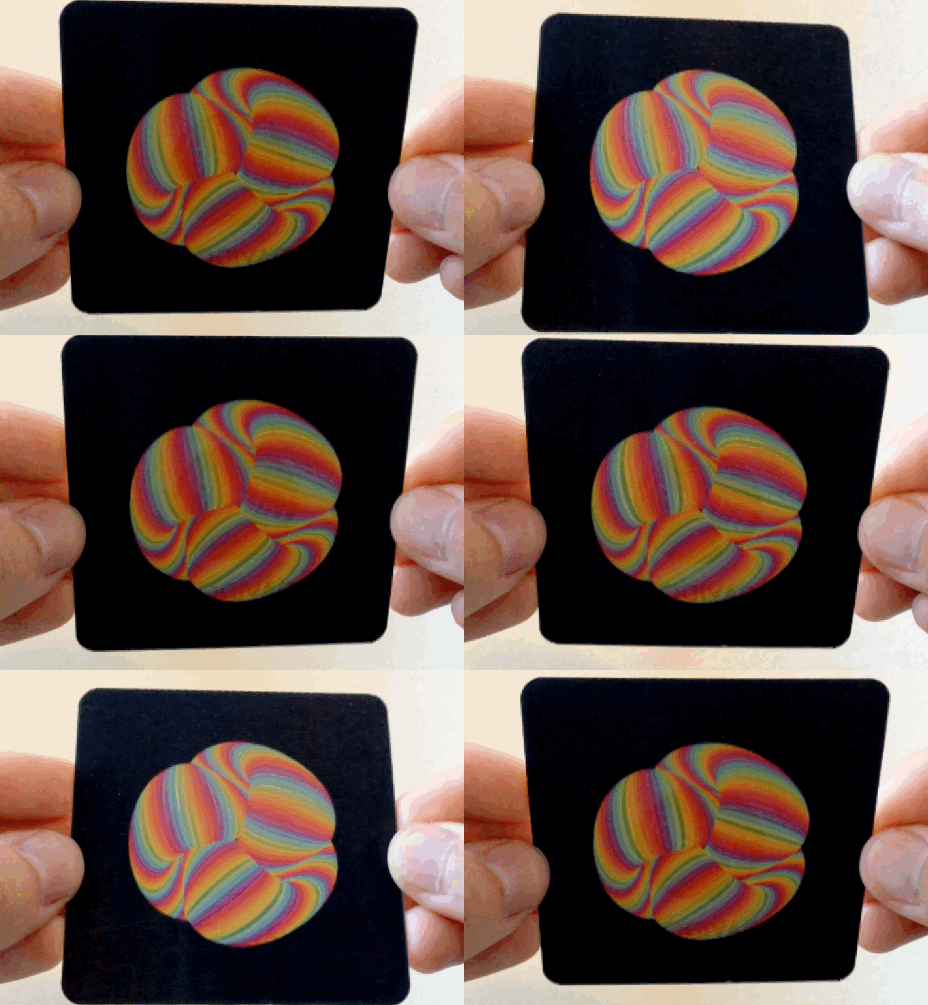
Have a look at Zack Dougherty’s beautifully trippy gif art.

Source: Zack Dougherty

Problem of course is that these mesmerising, animated, forever looping, wonderful gifs only exists on digital screens.

Not for long though, as a Kickstarter project by @rachelbinx and @shashashasha that uses lenticular printing to bring gifs to life. Called Gifpop!, the service has already crushed its funding target of $5,000 less than 24 hours of going online – with over 400 backers donating over $15,000 (The Atlantic has more about how it all came about).

Can’t wait!

Source: Gifpop! Also, OMG, it’s a gif of a Gifpop!

Jonathan Perelman from Buzzfeed doesn’t like banner ads: Or, to quote him: “You’re more likely to summit Mount Everest than click on a banner ad.” From the Guardian’s take on Perelman’s speech at the the Abu Dhabi Media Summit 2013 – it sounded like many other people in the room agreed with his view that banner ads are (on the way) out.

He goes on to talk about ‘native advertising‘ – that dangerous amalgamation of content and advertising – an area that Buzzfeed excels in and has earned them 85 million unique visitors a month.

How do journalists use Twitter? Great little Q&A with @jenniferpreston about how to verifies Tweets when a story breaks and some of the principles she applies to source fast-moving stories.

Mobile or beer? Amstel, the Dutch Brewery company, has developed a clever little app that rewards you with free beer – if you don’t touch your phone for 8 hours. Called ‘Amstel‘, the app simply tracks how long you haven’t touched your phone.

Source: Amstel

Fast Company has more on the campaign – meanwhile, the question remains: could you go eight hours without touching your phone? (Or could you just turn it on when you go to bed and wake up to a free Amstel?).

Videos of the week: “Russell Brand, who are you to edit a political magazine?” So begins the interview on Newsnight between Jeremy Paxman and Russell Brand and my word is it good. That Brand is one eloquent customer.

Never not, part 2 – a beautiful 50 minute short film by Nike featuring some of the world’s top snowboarders, tricks, flips and a hell of a lot of snow.

A fantastic animation by Blank on Blank of an interview with Kurt Cobain on identity.

And finally: Workw*nkers

Internal brand ambassadors, gamification at work, the power of Google Maps and this week’s bits and bytes

Halloween is coming: They’re carving some pumpkins in the food centre, fancy coming along and making a Vine? Ummm… Yes! Off I went this morning to Sainsbury’s ground level food centre (yes, I love my job) and watched @BethanyJStone carve this gruesome scene of a Ghost Pumpkin eating a wee Munchkin Pumpkin.

We thought we’d have a bit of fun and encourage our followers on @SainsburysPR to tweet us a video, photo or Vine, showing us how they carve your pumpkin. Our favourite entry will walk away with a £50 Sainsbury’s voucher.

The first entries have come in already, and we’re saving them all in a spooky little Storify.

Socialise your people: A wonderful post by @anitaloomba about one of the most overlooked and underused resource in the corporate social media space: the people that work for your company. Why don’t companies empower their people to use social media for their jobs? Why block people from accessing social networks or blogs from work?

The answers take many forms: Everyone will just waste time on Facebook. They’ll give away company secrets. How can we control the message? Make sure that what’s being said is in line with company policy? But we have to protect our network’s bandwidth – what if everyone is just streaming clips from YouTube? Viruses. Hacking. Where’s my tin foil hat!

In the end they boil down to the fear of losing control. Losing control over people and over what they say.

Newsflash.

That control is gone. It started crumbling with the advent of the smartphone and continues to fall apart as people become more comfortable bringing digital into their lives because it helps them plan their lives, communicate with the people they care about – and wait for it – work more efficiently and collaboratively.

Three massively important things that you have to keep in mind when going social: training, encourage sharing, and lead by example.

Games are everywhere: While we’re on digital/social trends in the HR space, have a gander at an interview with Adam Penenberg – author of ‘Play at work: How Games inspire breakthrough thinking’ – about gamification at work and how some Fortune 500 companies are using games to engage employees.

What makes games so powerful?

“A good game gives us meaningful accomplishment, clear achievement that we don’t necessarily get from real life. In a game, you’ve beaten level four, the boss monster is dead, you have a badge, and now you have a super laser sword. Real life isn’t like that, right?”

Giving up on social ROI: An interesting story on Business Insider this week touting the death (how original) of social media ROI. Usually one of those that I ignore as click bait, but this one was shared by my friend @kaifischer who tends to not share (too much) rubbish.

The article is about a new report by BI Intelligence which shows that marketers are moving away from expressing the return on investment in social less in monetary terms and favouring metrics that speak to audience building, brand awareness, and customer relations: reach, engagement and sentiment.

I wish I was there: Buzzfeed picked posted a story about an Instagram feed powered entirely by photos taken from Google Maps. Sounds pretty mundane, but not through the eyes of graphic design student @mmeghan who scours the world for beautiful places on Google Maps.

There aren’t many places that the Google Maps cameras haven’t been…

In what essentially is a simple process, Meghan drops the wee yellow man on a location that’s been photographed, takes a screen shot, transfers the image to her phone, and uploads it to the I wish I was there Instagram, using one of the many filters.

View this post on Instagram

Interstate 10, Arizona, USA

A post shared by i_wish_i_was_there (@i_wish_i_was_there) on

Meghan’s eye for photography, composition and design clearly play a factor in her eclectic mix of images.

View this post on Instagram

Antarctica

A post shared by i_wish_i_was_there (@i_wish_i_was_there) on

Any airlines or travel companies looking to hire a social media manager out there listening?

View this post on Instagram

206 Rodovia MA-026, Codó, Maranhão, Brazil

A post shared by i_wish_i_was_there (@i_wish_i_was_there) on

Fight the Price: Hats off to the chaps at Co-op Electricals, who’ve come up with what I thought is an interesting twist on that old classic, a Twitter Retweet competition. Rather than just have people retweet a message to spread a message, the Co-op are allowing the number of retweets to push down the price of selected home electricals.

Twitter users are encourage to tweet something like: I’m driving down the cost of a Hotpoint Dishwasher with @thecooperative Electrical. Visit http://www.fighttheprice.co.uk to help #FightThePrice

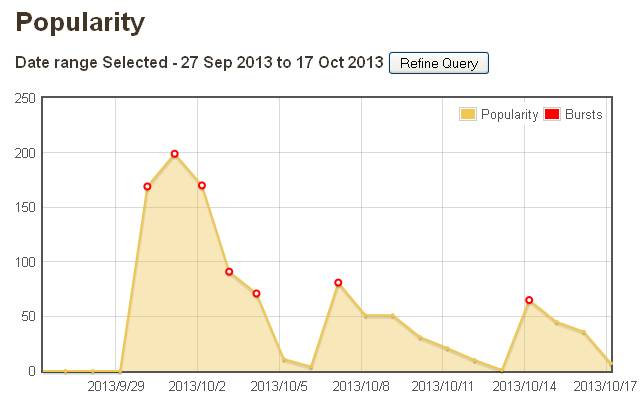
fight the priceAs of this morning, I was tracking about 1,100 mentions of the #FightThePrice hashtag since it went live in September. From the three spikes, it looks like they’ve had three campaigns, all running for about a week – at which time they release a discount code that customers can then input on the ecommerce website and purchase the product.

FF Mark: One for typeface/design/Parallax scrolling aficionados. You’ll want a trackpad for this rather than a scroll-wheel.

Videos of the week: Last year Felix Baumgartner jumped from the edge of space and hurtled towards the earth – breaking the sound barrier on the way. The world watched as the event was broadcast live on YouTube. Relive those bonkers 10 minutes from the perspective of Baumgartner in this epic point-of-view video just released by Red Bull.

For more than a quarter century, Saroo Brierley searched for his family before finding his way back home with the help of Google Earth.

A spooky bit of baking magic from Sainsbury’s with this how-to video for a spooky Halloween pumpkin cake. If you think you’re up to the challenge, you can find the full list of ingredients and instructions on the Live Well for Less site.

And finally: Fullscreen Mario (only works on Google Chrome)

Twitter biogs, TV ratings, storms; and this week’s bits and bytes

Quiz time: How many Sainsbury’s basics blurbs can you match up with the product they describe? As you’d expect, Lee, Sainsbury’s basics brand manager, scored a perfect 10/10. I scored a respectable 7/10. More of a by Sainsbury’s shopper, me (HT @G3Bowden).

Not enough?

How about testing your knowledge of Ikea and black metal bands in this brilliant (and genuinely hard) ‘Ikea or Death‘ quiz (HT @a_little_wine).

The future of journalism: Katharine Viner, deputy editor of the Guardian and editor-in-chief of Guardian Australia, gave the AN Smith lecture in Melbourne this week. Her speech about journalism in the age of the open web is an absolute must read. And no, there isn’t a TL;DR version of this one.

Remember Mr Cake? You know, the chap that resigned from his job at the Stansted Border Force via a ‘resignation cake‘ in order to pursue his passion for baking and cake decorating. Well, he did go on to launch his own business and now he’s up for a Smarta 100 award for Best us of Marketing. Go on. You know you want to vote for him.

The Twitter bio – a postmodern art form: The key to Twitter is all about compressing your thought, insight or story into 140 characters. It’s a skill that – much like everything else – you learn through practice. The more you tweet, the better you get. But what many people don’t spend as much time on is their 160 character Twitter biography – along with the profile photo and background, the bit that let’s people know what you’re all about.

The New York Times takes a look at the art of the Twitter bio, from @HillaryClinton “Wife, mom, lawyer, women & kids advocate, FLOAR, FLOTUS, US Senator, SecState, author, dog owner, hair icon, pantsuit aficionado, glass ceiling cracker, TBD…” to @TomHanks‘ “I’m that actor in some of the movies you liked and some you didn’t. Sometimes I’m in pretty good shape, other times I’m not. Hey, you gotta live, you know?” – the article looks at pitfalls and cliches to avoid.

While we’re on short form content, here’s a great slideshare by @GinnyRedish about writing for the small screen. It’s well and good to think about responsive design for websites – but what does that mean for content?

Twitter is not real life (well, TV): An interesting bit of data published by Twitter and Nielsen this week shows that the most popular shows in terms of TV ratings and the amount of Tweets they generated do not correlate at all. as the Wall Street Journal points out, it shows that Twitter’s user base “has a very different makeup than the mass-market TV-viewing audience that marketers spend tens of billions of dollars each year to reach. Twitter’s 49.2 million U.S. users generally skew younger and are disproportionately in cities, for example, according to marketers and media analysts.” The full report is out on Monday.

Social is the new coffee-break: Many brands and companies have moved chunks of their budget from traditional marketing channels to digital and social channels. Nothing new there. At the same time, many corporate networks block access to the same social network. The schizophrenic relationship between a select group of individuals who have access to social and are creating beautiful content and social campaigns and with those who don’t have access from their work computer has always struck me as particularly bizarre. Why put all that effort into building a social media following around your brand if you won’t allow your own people to look at it?

Andrew Keen pulls together 5 reasons not to ban social media in the office. And what do you know – they all make sense!

  • It’s self-defeating – everyone has a smart phone, so they’re doing it anyway
  • Banning something that excels at undermining traditional hierarchies? Yeah, right.
  • It’s today’s version of the water cooler
  • Multitasking actually makes us more creative
  • Social media makes us more productive because it opens up our minds

Bullet Journal: For the past two weeks I’ve been using a note taking system devised by @rydercarroll called ‘Bullet Journal‘. Described as an analogue note taking system for a digital world, I thought the video was really well done and the system works perfectly to capture all those wee actions and events that make up my disjointed and disruptive day where I get pulled from meeting to tweet to discussion to blog post – all in the same hour.

I’ve moved away entirely from Evernote and my iPad and now only use this ‘old school’ system and I love it. There’s something to be said about that great satisfaction of ticking things off a to do list, but also for the elegance of how the Bullet Journal system also allows you to build specific pages for projects or collections, track events on a day to day or monthly basis. And all you need is a notebook.

The Twitterstorm: Hats off to BuzzFeed UK for pulling together their post on the 29 stages of a Twitterstorm – based on the recent kerfuffle around online retailer Price Hound selling a rather ill advised kids fancy dress costume.

From initial discovery, anger, confusion, boycott, petition, satire, trending on Twitter, the media catching up, politicians getting involved, social media expert analysis to the official apology – all in the space of a few hours – the post takes us through (HT @G3Bowden).

Scarlett Johansson Falling Down: A year ago, Scarlett Johansson was photographed falling down while filming in Glasgow for the sci-fic flick Under the Skin. It’s taken the Internet a year, but the resulting photoshop meme is rather worth the wait. Knowyourmeme looks at how it happened (the meme, not the fall).

Videos of the week: How do you promote a remake of the classic horror flick Carrie? By creating a telekinetic coffee shop surprise and scaring the pants off of some unsuspecting customers – all while amassing over 30 million YouTube views in four days.

Downside – the mobile app that will get you talking to your friends again.

And finally: The Penis Beaker that brought Mumsnet to its knees.

Blog at WordPress.com.

Up ↑